RESEARCH suggests that ‘personalised’ hip replacement surgery could revolutionise treatment for people suffering from hip arthritis.
This approach tailors hip replacements to each patient’s unique movement patterns, potentially improving outcomes and reducing complications.
Current hip replacements are designed based on a ‘normal’ hip, which may not account for individual variations in hip movement.
Researchers from WMG at The University of Warwick, in collaboration with University Hospitals Coventry and Warwickshire (UHCW) NHS Trust and Corin Group, have pioneered an advanced technology that promises to customize hip replacements for better surgical success.
With more than 100,000 hip replacements performed annually in the UK, mostly due to arthritis, this breakthrough could significantly enhance patient care.
The study tackled longstanding issues in hip replacement surgery, focusing on the specific range of motion needed and the value of personalised surgery calculated preoperatively.
Lead researcher Dr. Arnab Palit, assistant professor at WMG at The University of Warwick, and his team utilised real-life and computer models to compare simulated and actual hip motions.
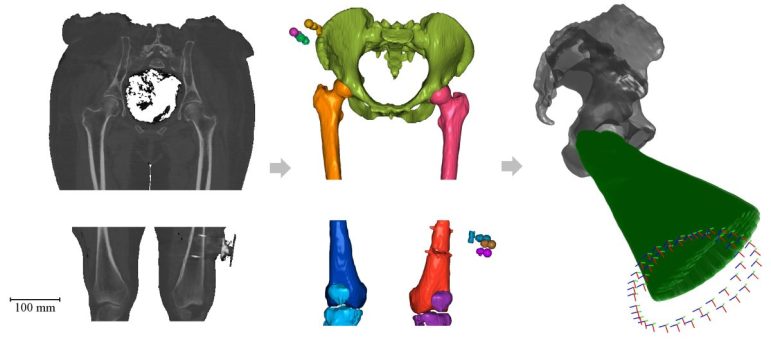
Their findings demonstrated that specific hip movements could be accurately predicted using state-of-the-art computer simulations based on CT scans of the patient’s hip joint, closely mirroring real hip motions.
Dr. Palit said: “This research shows a big step forward in hip replacement planning.
“By using computer simulations based on a patient’s hip shape from CT scans, we can predict certain hip movements accurately.
“During surgery, these predicted movements can guide surgeons to place implants in the best positions for each patient.
“So, instead of using average measurements, we’re customising the surgery to fit each person perfectly, leading to better outcomes.”
This personalised approach allows surgeons to plan hip surgeries based on patient-specific target hip motions, rather than relying on population norms or arbitrary ‘normal’ values.
The potential benefits of using tailor-made hip replacements include improved success rates for operations, reduced risk of clinical problems post-surgery, and minimised chances of needing revision surgery.