A COVENTRY care home has trialed AI-powered technology aimed at improving worker safety and reducing injury rates.
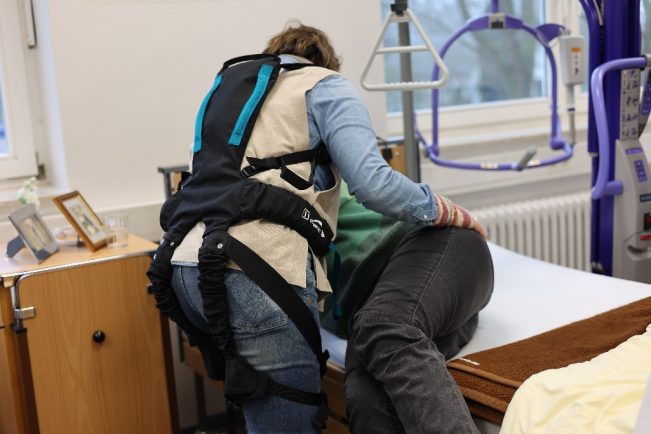
Over a two-week period, Clarendon House Care Home tested the BionicBack exoskeleton – a passive suit designed by safety experts Stanley, with promising results that could reshape the future of care work.
The trial was part of a collaborative effort between Clarendon House and Stanley, whose approach was key to identifying the right exoskeleton for the physically demanding tasks performed by care workers.
The process began with ergonomic safety consultants from Stanley using advanced video scanning technology to analyse specific tasks carried out by the carers, including lifting and repositioning patients.
The collected data was thoroughly reviewed to determine the most suitable exoskeleton for the job.
The BionicBack exoskeleton was recommended for its ability to support up to 60kg of weight, significantly reducing the risk of musculoskeletal disorders by enhancing stability during tasks such as bending, lifting, and transferring patients.
Workers reported feeling 33 per cent less fatigued while wearing the suit, and no injuries were reported during the trial period.
Stanley’s head of ergonomic safety, Andre Jutel, said: “The consultative approach and phased trial process were crucial in ensuring that Clarendon House selected the correct exoskeleton for their team.
“The data collected provided invaluable insights, demonstrating how the BionicBack suit significantly reduces the risk of back injuries.
“We’re excited to continue our partnership with Clarendon House to further enhance workplace safety.”
Agoritsa Karagiampa, a team leader at Clarendon House, added: “After a while, it felt like I wasn’t even wearing the BionicBack exoskeleton.
“The suit allowed me to confidently lift and move patients, knowing that I had the extra back support. It was easily adjustable, and I would love to continue wearing the suit at work.”