CHEMICALS that can be harmful to people and wildlife for a long time have been found in the Amazon rainforest by a Coventry University researcher.
Samples of air were collected at an observatory in the rainforest were analysed by Dr Ivan Kourtchev, who found ‘forever chemicals’ in the atmosphere.
He said it was shocking to discover such high levels of perfluoroalkyl and polyfluoroalkyl substances (PFAS).
PFAS are human made chemicals including a diverse range of around 5,000 toxic chemcials used to make items like a non-stick frying pan, food packaging and adhesives.
They have been linked to causing health effects such as infertility and development issues in pregnant women and babies.
Dr Kourtchev, from the university’s research centre fot agroecology, water and resilience hopes that this research can help discover how the chemicals are being transported.
The international research collaboration is between Coventry University and the Federal University of Parana, National Institute of Amazonian Research and Federal Institute of Pará in Brazil, the Max Planck Institute for Chemistry in Germany, the University of Graz in Austria, and the University of Cambridge.
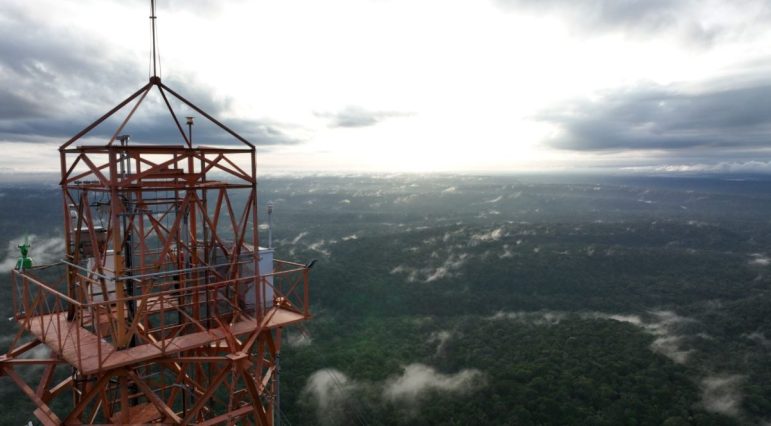
Samples were collected from the Amazon Tall Tower observatory in the middle of the rainforest – it is taller than the Eiffel tower at 325 meters.
The samples were taken to Coventry University and were analysed by Dr Kourtchev using a sensitive technique developed at CAWR.
He said: “We collected samples right at the top of the tower and also at tree canopy level – about 42 metres.
“What was shocking to us was that we saw PFAS – we didn’t expect to and we also saw more at the top of tower.
“If PFAS were to be locally emitted, they should be found lower down the tower. This means PFAS were long-range transported and have been brought from somewhere. It was very puzzling to us.”
Dr Kourtchev added the Amazon is home to unique vegetation and wildlife so the chemicals can have a big impact.
“In sensitive ecosystems with rare or endangered species, such disruptions can have devastating effects on biodiversity and species survival. PFAS could also adversely affect the health of people living in the rainforest.”
PFAS have been found in places such as Antarctica where sea spray is believed to have transported the chemicals to the South Pole.