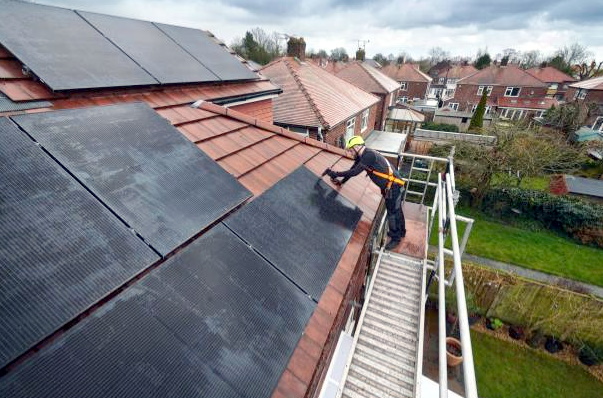
As the world urgently needs to address climate change and transition towards sustainable energy sources, solar panels have emerged as a leading solution in the global effort to reduce carbon emissions. In the past, one of the main obstacles to their expansion was the high cost of solar panels in the UK. However, this has changed dramatically in recent years, thanks to technological advances and the subsequent cheapening of these technologies.
Countries worldwide are increasingly investing in solar energy, making it one of the fastest-growing renewable power sources. But how does the UK compare in this global movement? In this article, we’ll explore the worldwide adoption of solar panels and assess the UK’s progress in embracing solar energy.
The Global Boom in Solar Energy
Over the past decade, solar energy has experienced remarkable growth globally. According to the International Energy Agency (IEA), solar power was the fastest-growing renewable energy source in 2022, with new installations reaching record levels. This surge is driven by several factors, including falling costs of solar technology, government incentives, and increasing public awareness of the environmental impact of fossil fuels.
Countries like China, the United States, and India have been leading the adoption of solar energy. China, in particular, is the world’s largest producer and consumer of solar power, accounting for nearly a third of the world’s total installed solar capacity. The country’s rapid expansion in solar energy is part of its broader strategy to reduce reliance on coal and become a global leader in renewable energy.
Similarly, the United States has seen significant growth in solar installations, particularly in states like California and Texas, where sunny climates make solar power an attractive option. Federal tax credits and state-level incentives have further accelerated adoption, making solar energy more accessible to a broader range of consumers.
India, too, has made ambitious strides in solar energy, aiming to achieve 100 GW of solar capacity by 2022 as part of its National Solar Mission. The country’s vast landmass and high levels of sunlight make it ideally suited for solar power, and the government has implemented various policies to support the development of solar infrastructure.
Solar Panel Adoption in the UK: Progress and Challenges
While the UK may not enjoy the same levels of sunlight as some of the solar power giants, it has nonetheless made significant progress in adopting solar energy. The UK’s journey into solar power began in earnest with the introduction of the Feed-in Tariff (FiT) scheme in 2010, which incentivised homeowners and businesses to install solar panels by offering payments for the electricity they generated.
By 2023, the UK had installed over 14 GW of solar capacity, making it one of the largest solar markets in Europe. This growth was driven by a combination of government policies, falling solar technology costs, and increasing consumer interest in renewable energy. Despite the closure of the FiT scheme to new applicants in 2019, the UK continues to see steady growth in solar installations, supported by the Smart Export Guarantee (SEG) and other initiatives.
How the UK Compares Globally
In terms of solar capacity, the UK ranks among the top 10 countries worldwide, a notable achievement given its relatively modest levels of sunlight compared to countries like Spain or Australia. However, the pace of solar adoption in the UK has slowed in recent years, particularly following the end of the FiT scheme. This has led to concerns that the UK may fall behind other European countries, such as Germany and Spain, which have continued to expand their solar capacity rapidly.
Germany, for instance, has long been a leader in solar energy. Its strong commitment to renewable energy has seen it install over 50GW of solar capacity. The country’s Energiewende (energy transition) policy has driven significant investments in solar power, supported by a robust regulatory framework and widespread public support.
With its abundant sunshine, Spain has also emerged as a major player in solar energy, particularly after lifting regulatory barriers that had previously hindered the sector’s growth. The country now has one of the fastest-growing solar markets in Europe, with ambitious targets to increase solar capacity as part of its broader renewable energy strategy.
Opportunities and Challenges for Solar Energy in the UK
The UK’s relatively slow growth in solar energy adoption in recent years can be attributed to several challenges. The reduction of government subsidies and the complexities of planning regulations have made it more difficult for some homeowners and businesses to invest in solar panels. Additionally, the UK’s climate, with its often overcast skies, poses natural limitations on the efficiency of solar power.
However, there are also significant opportunities for growth. Advances in solar technology, such as the development of more efficient solar panels and energy storage solutions, could help increase the viability of solar power in the UK. Furthermore, rising energy costs and growing awareness of climate change are likely to drive increased interest in solar energy as a way to reduce household energy bills and carbon emissions.
The UK government has set ambitious targets to achieve net-zero carbon emissions by 2050, and solar energy will play a crucial role in reaching this goal. Policies such as the Smart Export Guarantee (SEG), which pays households for the excess energy they generate, encourage more people to invest in solar power. Additionally, the growing trend towards “solar-plus-storage” systems, where solar panels are paired with battery storage, offers the potential for greater energy independence and resilience.
The Future of Solar Energy in the UK
As the global push towards renewable energy continues, the UK can reaffirm its commitment to solar power and reclaim its position as a leader in the field. By addressing the challenges of cost, regulation, and efficiency and by capitalising on technological advancements, the UK can further expand its solar capacity and contribute to a more sustainable future.
Solar energy is no longer just the domain of sunny countries – it is a critical component of the global energy transition, offering a viable solution for reducing carbon emissions and tackling climate change. With the right policies and incentives, the UK can continue to play a significant role in this worldwide movement, ensuring that solar power becomes an integral part of the nation’s energy mix.