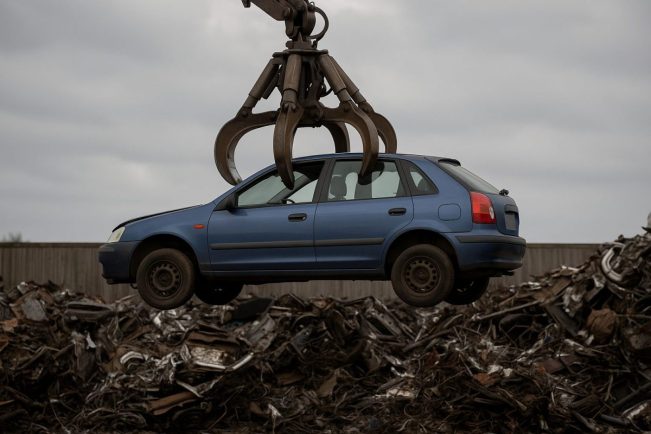
Ever wondered what really happens to your car after you’ve dropped it off at the scrap yard?
Your car goes through a strict process where harmful parts are removed, materials are recycled, and almost nothing is wasted.
This means those old cars are handled in an environmentally friendly way, with safety steps in place to protect both people and the planet.
What’s interesting is that not all scrapped cars are crushed right away—some parts may be reused or sold, and your car’s metals might become something entirely new in the future. Understanding this process can help you make better choices when it’s time to say goodbye to your vehicle.
Understanding the Car Scrapping Process
Scrapping a car is a regulated process that involves legal, environmental, and safety steps. It matters where you take your car and how the process is handled, both for your peace of mind and to meet the law.
What Is an End of Life Vehicle
An End of Life Vehicle (ELV) is a car that is no longer roadworthy, cost-effective to repair, or safe to drive. This can happen because of age, mechanical issues, or damage from an accident.
When your car becomes an ELV, you need to dispose of it through the correct channels. ELVs must be scrapped following strict rules, to help reduce waste and pollution. The main aim is to safely remove hazardous parts, recycle valuable materials, and follow the law.
If you think your car is at this stage, it is your responsibility to make sure it’s scrapped correctly. Doing this helps protect the environment and ensures you aren’t liable for any future problems with the vehicle.
How Authorised Treatment Facilities Operate
An Authorised Treatment Facility (ATF) is a fully licensed site that is approved by the government to handle scrap vehicles. Only these centres can legally process ELVs and issue a Certificate of Destruction.
The scrapping process at an ATF involves several stages:
- Depollution: All hazardous fluids and materials such as oil, coolant, and batteries are safely removed.
- Dismantling: Usable or recyclable parts like tyres, windows, and some metal components are stripped.
- Crushing/Compacting: The remaining shell is crushed, extra space is saved, and metal is sent to be recycled.
Choosing an ATF protects you and ensures that every step of scrapping a car is safe and legal.
Legal Steps in Scrapping a Car
There are strict legal steps to follow when you scrap your car. First, you must take it to an authorised treatment facility. After your car is processed, the ATF will provide you with a Certificate of Destruction within seven days, if you request it.
This certificate is important because it proves the car has been processed and you are no longer responsible for it. You must tell the DVLA that your vehicle has been scrapped to avoid fines or future legal issues.
If you do not follow these steps, you could be held accountable for the vehicle even after it has been taken away.
What Happens to Your Vehicle at the Scrap Yard
Your car goes through several important steps after arriving at the scrap yard. These steps are designed to handle hazardous materials carefully, salvage usable components, and recycle scrap metal safely.
Depollution and Dismantling Procedures
When you bring your vehicle to an authorised treatment facility (ATF), the first step is depollution. Staff drain all fluids, such as engine oil, fuel, coolant, and brake fluid. This keeps dangerous substances from harming the environment.
Then, workers remove items like the battery and tyres because they need proper disposal or recycling. Airbags and gas canisters are also taken out for safety reasons. The ATF will carefully strip hazardous parts before doing anything else.
This process follows strict rules in the UK. Every car must be fully depolluted before the rest of the scrapping can continue. The goal is to protect the environment and ensure your old car doesn’t cause pollution or present safety risks.
Recovery of Spare Parts
Next, workers look for any parts that can be reused. Engines, alternators, starter motors, and other valuable components are removed and checked. Many people look for these second-hand car parts because they are often in good shape and cost less than new ones.
This stage helps reduce waste. It saves resources by giving car parts a second life, and it can help other drivers find affordable replacements. The ATF must report which parts have been recovered if required by law.
Processing Scrap Metal
After fluids and useful parts are removed, your car is mostly metal. The shell is sent for crushing and then shredding in large machines. This breaks the car down into smaller pieces that are easier to separate and transport.
A strong magnet is used to pull out ferrous metals, like steel. Lighter, non-ferrous metals—such as aluminium—are sorted from the rest using different methods like air classifiers or heavy media separators. These metals are then sent to specialist recyclers who melt them down and turn them into new products.
The ATF ensures the recycling process follows strict standards.
Documentation and Legal Compliance
When you scrap a car, you must follow several legal steps and gather the right paperwork. Keeping your documents in order helps avoid fines and makes sure your vehicle details are properly updated with the authorities.
Receiving a Certificate of Destruction
After taking your car to an Authorised Treatment Facility (ATF), you should be given a Certificate of Destruction (CoD), usually within seven days. This official document proves your vehicle has been dismantled and can no longer be used on the road. Only an ATF can issue a genuine CoD.
The CoD is important as it protects you from being held responsible for the car after it is scrapped. With the CoD, you have proof you followed legal procedures. You should always keep this certificate for your records.
Notifying the DVLA
It is your legal duty to tell the DVLA when your vehicle has been scrapped. This lets them update their records and removes your name from the car registration. Failing to notify the DVLA could result in a fine, as you would still be seen as the legal keeper.
You can usually inform the DVLA online, by post, or with the V5C registration certificate. You must provide information about the ATF and the date your car was destroyed. Make sure to only use official channels so your notification is processed correctly.
Managing SORN and Private Land Issues
If your vehicle has a Statutory Off Road Notification (SORN), you still need to update its status once it is scrapped. SORN tells the DVLA your car is not being used on public roads, but after scrapping, you must let them know so you are no longer responsible for it.
Sometimes, people store SORN vehicles on private land before scrapping. Even in those cases, after scrapping, the DVLA requires notification. If your car was not on the road or kept on private land, you should still follow official steps to confirm its destruction. This helps prevent future problems and ensures you meet all legal requirements.
By William Fletcher