Comedian and actor Sir Lenny Henry has said that Britain should pay slavery reparations to Black people in the UK and across the Caribbean.
The Dudley-born entertainer makes the case in a new book he has co-written with Marcus Ryder, a television executive and charity leader, titled The Big Payback, which will be published by Faber on October 9.
The book argues that the UK should hand over £18 trillion in reparations, both to Caribbean nations and to individual Black British citizens.
Writing in the book, Sir Lenny says:
“All black British people … need reparations for slavery,” adding that “we personally deserve money for the effects of slavery.”
A section of the book sets out historical precedents for compensatory payments and explores how reparations might be distributed among nations and individuals.
Sir Lenny argues that many of the inequalities seen today are rooted in the legacy of the transatlantic slave trade. He writes:
“The reason we have racism today and also … why black British people are grossly over-represented in the prison population” – as well as in unemployment figures – “are all because of the transatlantic slave trade.”
The book suggests that reparations could go beyond financial redress, aiming to tackle systemic racism. It argues that payments could be used for “ridding the world of racism,” and calls for reparations to “dismantle the foundations” of Western societies built on slavery and create “new foundations” through the redistribution of power.
Figures referenced in The Big Payback are drawn from research by the Brattle Group, which estimates that Western nations owe around $100 trillion to former colonies. The calculations take into account factors such as loss of liberty, mental suffering, and unpaid labour.
The book also includes contributions from Labour MP Bell Ribeiro-Addy and academic Professor Kehinde Andrews, who has previously been criticised for describing Winston Churchill as the “perfect embodiment of white supremacy”.
The release of The Big Payback comes at a time when the campaign for reparations has gained momentum internationally. The Caribbean Community (Caricom) has developed a ten-point plan calling for financial compensation, formal apologies, debt relief, and investment in education and development from former colonial powers. The African Union has also recently echoed these demands, calling for what it described as “meaningful reparations” from European nations with colonial histories.
However, not everyone agrees with Sir Lenny’s position. Historian Rafe Heydel-Mankoo dismissed the suggestion of reparations, saying:
“That’s the funniest thing he’s said since 1983.”
Lord Hannan, a Conservative peer, questioned the fairness and direction of reparations, saying:
“African nations that took the slaves want reparations from Britain. West Indian nations want reparations – not from Africa, but from Britain. Lenny Henry, who I’m pretty sure is from Dudley, wants reparations from Britain. Is anyone NOT in on the racket?”
Political commentator Sophie Corcoran also rejected the idea, arguing:
“You were not a slave, Lenny – you were not affected by slavery and equally no one today owned slaves so why should the people who were not at fault – give money to people who were not affected.”
Britain’s Role in Ending Slavery
Many historians also argue that Britain’s role in ending slavery is too often overlooked in modern debates. Few nations in history can claim to have not only abolished slavery but actively fought against it across the globe. Britain did both, and at enormous cost in lives, money, and national sacrifice.
In 1807, Parliament passed the Slave Trade Act, led by campaigner William Wilberforce, making it illegal to buy or sell enslaved people within the British Empire. This was the first major step by any global power to end the trade.
By 1833, the Slavery Abolition Act had gone even further, outlawing slavery throughout Britain’s vast empire despite its heavy reliance on colonial plantations. To achieve this peacefully, the government spent what would now be equivalent to over £20 billion compensating slave owners, a sum so large it took until 2014 to repay the national debt meaning most adult Britons alive today helped to fund the end of slavery.
After abolition, Britain’s Royal Navy also created the West Africa Squadron, which patrolled the Atlantic to intercept slave ships. Over the next six decades, British sailors freed more than 150,000 captives and seized around 1,600 vessels engaged in the illegal trade. More than 2,000 British sailors also lost their lives in the effort.
Many argue that this military, financial and moral commitment marked Britain as the world leader in abolishing slavery.
As historian Heydel-Mankoo and others have noted, Britain’s record in fighting the slave trade is “a legacy worth remembering” — one that came at enormous cost but helped bring an end to one of humanity’s darkest chapters.
Have Your Say
Do you agree with Sir Lenny Henry that Britain should pay reparations for slavery, or do you believe Britain should instead be recognised for leading the world in ending it? We’d love to hear your thoughts.
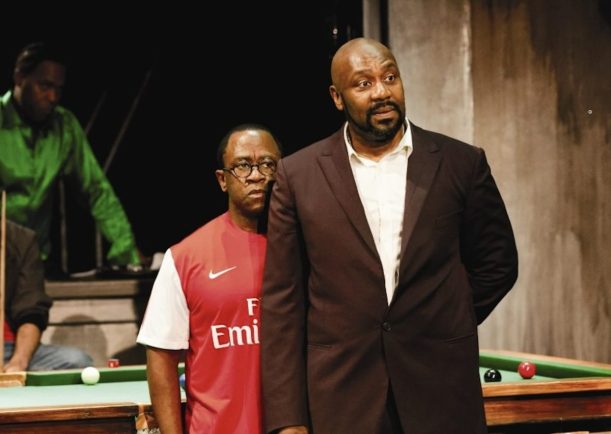
Main Image: Lenny Henry in “The Comedy of Errors” at the National Theatre, Creative Commons Attribution 3.0 Unported license.