Chancellor Rachel Reeves has confirmed that wealthier taxpayers will face higher taxes in next month’s Budget, following a warning from the Institute for Fiscal Studies (IFS) that the government may need to find up to £40 billion to stabilise the nation’s finances.
In a pre-Budget assessment, the IFS said the Treasury could be heading for what it described as a “fiscal Groundhog Day,” a repeat of recurring shortfalls and last-minute adjustments, unless the Chancellor introduces substantial tax increases or spending cuts.
Reeves, however, made clear she will not pursue deep spending reductions, instead signalling that “taxes on the wealthy” will contribute to her plan.
“When people scaremonger again this year, we should take some of that with a pinch of salt,” she said, defending her earlier tax measures against what she called “bleating” and “scaremongering.”
According to the IFS, a worsening economic outlook and recent policy reversals have opened a £22 billion gap in public finances. The think tank also pointed to an additional £6 billion loss from U-turns, £5 billion from higher interest costs, and £11 billion due to slower growth.
Reeves told Sky News she is “looking at tax and spending” as she prepares her first full Budget as Chancellor. She also recognised the risk of what she described as a “doom loop,” slow growth leading to higher taxes, which in turn further limits growth. “Nobody wants that cycle to end more than I do,” she said.
In a separate interview with The Guardian, Reeves defended her 2024 tax decisions, including ending the non-dom tax status and introducing VAT on private school fees.
“Last year, when we announced things like [removing tax exemptions for] non-doms, like the [tax increase for] private equity, like the VAT on private school fees, there was so much bleating that it wasn’t going to raise the money, that people would leave,” she said. “The OBR will publish updated numbers on all of those things. And that scaremongering didn’t pay off, because … people want to live here.”
Although opposition MPs have argued that a growing number of Britain’s wealthy residents are leaving the country, “taking their businesses with them.”
Reeves has rejected a formal wealth tax but other options such as aligning capital gains with income tax rates, imposing additional charges on banks, or extending national insurance to rental income, have not been dismissed.
IFS director Helen Miller said that while large swings in economic forecasts were not uncommon, a stronger buffer may now be needed.
“This is not ‘IFS says do 40 billion of tax rises,’ this is ‘IFS says you’re probably going to need a fiscal consolidation, you might want to do a bigger one,’” she said. “There is a strong case to do something big enough that you don’t keep getting back into fiscal Groundhog Day.”
The IFS warned that Reeves faces roughly a one-in-three chance of having to raise taxes again next year if she adheres to her current fiscal rules. It added that proving to financial markets that no further tax rises will be necessary in the short term could help reduce borrowing costs and improve economic confidence.
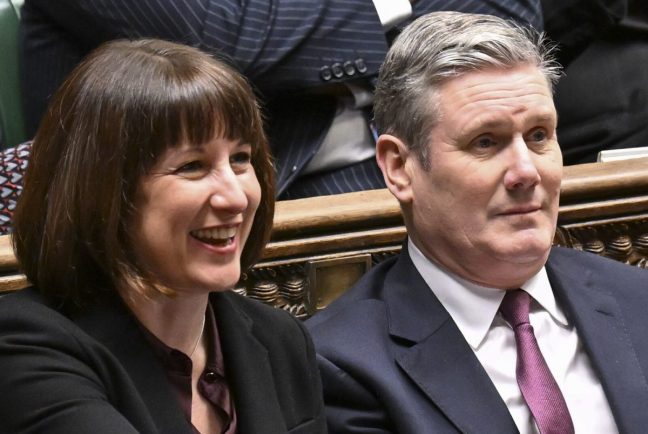
Main Image: © UK Parliament / Maria Unger. Licensed under the Creative Commons Attribution 3.0 Unported license.