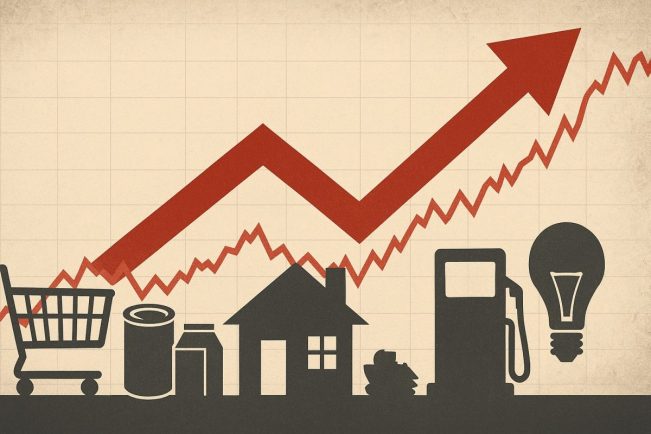
Britain’s inflation rate remained stuck at 3.8% in September, the third consecutive month without improvement, according to the Office for National Statistics (ONS).
The figures underline the Government’s struggle to bring prices under control ahead of Chancellor Rachel Reeves’ crucial Budget next month.
The Consumer Prices Index (CPI), the key measure of inflation, is still almost twice the Bank of England’s 2% target, highlighting how far the UK remains from price stability.
The ONS said inflation was held up by airfares and fuel costs, which fell last month but not as sharply as they did a year ago. Despite some easing in food and energy prices earlier in the year, overall price growth has failed to slow meaningfully, suggesting that inflationary pressures remain deeply entrenched in the economy.
The persistently high rate is likely to complicate the Bank of England’s plans to lower interest rates, keeping borrowing costs elevated for homeowners and businesses. It will also increase the cost of servicing government debt, further straining public finances as the Treasury prepares its next fiscal statement.
The Bank of England forecast in August that inflation could reach around 4% this autumn, while the International Monetary Fund (IMF) recently predicted that the UK will record the highest inflation rate among the G7 economiesthis year, averaging 3.5%.
Economists point to a combination of rising food prices, household bills, and the impact of Labour’s tax increases on businesses as key factors keeping inflation high.
What Inflation Means for Households
Inflation measures how much prices are rising across the economy. When it remains high, the purchasing power of wages erodes, forcing families to spend more for the same goods and services. Essentials such as food, fuel, and energy bills take a larger share of household budgets, leaving less for savings or discretionary spending.
For millions of Britons, this means a persistent cost of living squeeze, with pay packets failing to stretch as far as they did before. Businesses, facing higher input costs, often pass these on to consumers, perpetuating the cycle of rising prices.
Today’s latest figures show that the fight against high prices is far from over, and that both the Government and the Bank of England face a difficult path to restore stability.