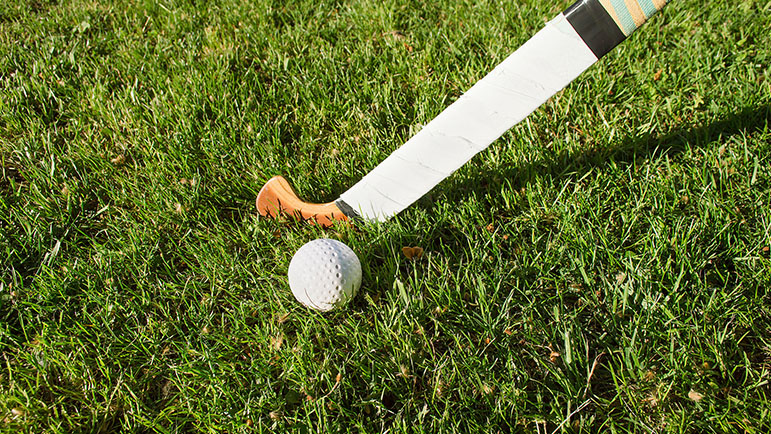
Hockey, as one of the most popular and spectacular games, always attracts spectators and fans because it is bright, exciting and uncompromising. Otherwise, the popular and beloved song with such wonderful lyrics would probably never have been written: ‘Real men play hockey, cowards don’t play hockey.’ . It is often played before games and during breaks in hockey matches.
However, hockey should not be perceived solely as a spectacle. Hockey is not just crossed sticks, the crash of boards and the crunch of ice accompanied by cheers from the stands. Hockey is also a long, subtle calculation, a game similar to chess, where the best players calculate their actions on the rink three or four moves ahead.
There are several versions of the origins of hockey. Most experts claim that various types of games played on grass were the prototypes of ice hockey. Hockey was already known in Ancient Greece. This is evidenced by the image of hockey players on the bas-relief of the wall of Themistocles. It is believed that the name ‘hockey’ comes from the old French word ‘hochet’ (the hook of a shepherd’s crook).
The first description of field hockey dates back to 1330 and is found in an Italian manuscript.
A modern approach to excitement – USA social casino games
Two centuries later, ice hockey appeared in Holland. This is confirmed by paintings by famous 18th-century artists. In particular, Romayk Huge’s painting ‘Portrait of a Hockey Player’ is of great interest. The emergence of ice hockey in Holland was facilitated by the widespread popularity of skating due to the favourable natural conditions. Ice hockey took shape as a sport in Canada, but its ‘forefathers’ were games with balls and sticks on ice, popular in Holland in the 16th and 17th centuries. Ice hockey, similar to modern ball hockey, was one of the favourite games of the Dutch. This is evidenced by numerous engravings and paintings by Dutch artists of that time.
At the end of the 17th and in the 18th century, interest in hockey declined significantly due to prolonged wars in Europe. It was only in the second half of the 19th century that the game became popular again. In England, bandy (hockey with a ball) became the most widespread form of hockey. Although Canada is considered the birthplace of modern ice hockey, it was the English who were ‘responsible’ for this. Ice hockey came to England from Holland, and from there to Canada.
By the 1870s, ice hockey was included in the programme of all winter sports festivals in Canada. The first hockey rules were formulated by students at the University of Montreal. Two stones on the ice served as goals, defining the size of the space into which the puck could be shot.
1875 (3 March). The first official hockey match took place in Montreal at the Victoria Rink. The teams consisted of nine players, the game was played with a wooden disc, and goals were used.
1879 Canadian W.F. Robertson formulated the rules of hockey, proposing for the first time to use a rubber puck for the game. The first official rules of ice hockey were published in 1886. The author of the new code of rules was Canadian R. Smith.
1886 The first international match between Canadian and English teams was held (the Canadians won). Championships began to be held annually, and the winners were awarded the Stanley Cup.
In 1860, an English infantry regiment was sent to Canada, which included players of ‘bandy’ hockey. (Although prior to this, Montreal newspapers from 1847 mention that the city court had received complaints about young people ‘chasing flat stones on the ice with sticks’ at a public skating rink).
University students played a major role in spreading the game. Hockey was included in the programme of all university sports festivals. In the winter of 1879/80, students at the University of Montreal formulated the rules of the game for the first time.
Due to favourable climatic conditions, hockey quickly spread throughout Canada. In 1886, a set of hockey laws was compiled. The team consisted of seven field players (a goalkeeper, a front and back defender, a centre and two wing forwards, as well as a rover (‘rover’) who played in front of the forwards across the entire front of the opponent’s goal). Substitutions were only allowed for injured players.
In 1890, the first hockey association was created in the province of Ontario and the first championship was held.
In 1893, the Governor General of Canada, British Lord Stanley, established a silver cup to be awarded annually to the best team.
In 1899, the world’s first indoor stadium for hockey with artificial ice was built in Montreal, with a capacity of 10,000 spectators. The Canadian Amateur Hockey League was organised.
In 1900, Canadian Francis Nelson invented a goal net made from fishing netting. This was an important innovation that put an end to the eternal question: was it a goal? The modern dimensions of hockey rinks (61 x 30 m) were established. The game was divided into three 20-minute periods, the number of field players was reduced to six, and substitutions began to be practised.
In 1904, the first professional team, the Sault Ste. Marie, was formed in Canada. It brought together the strongest players of the time, including Art Ross, after whom the prize awarded today to the most productive NHL player is named. In the same year, the Canadians came to the conclusion that the ideal dimensions for a hockey rink were 56 by 26 metres. To this day, NHL games are played on such rinks.
At the beginning of the 20th century, professionals began playing in teams of six field players to increase speed. In 1910, the National Hockey Association (NHA) was created. In 1911, the Patrick brothers organised the Western Hockey Association (WHA). In January 1912, the first WHA match took place in Victoria. It went down in history as the first match on artificial ice.
This is a submitted article