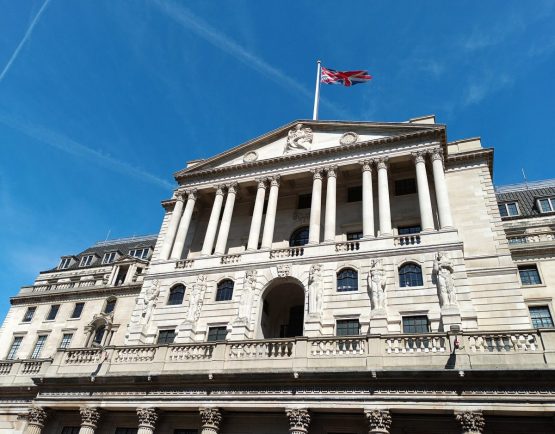
The Bank of England has kept interest rates at 4% following a close vote among policymakers, who judged that inflation in the UK has now peaked.
The Monetary Policy Committee split 5–4 today in favour of maintaining the current rate, and signalled that borrowing costs are “likely to continue on a gradual downward path”.
Governor Andrew Bailey said the Bank was not yet ready to begin reducing rates. Rather than acting immediately, he said he would “prefer to wait and see” whether the slowdown in price rises continues through the rest of the year.
The decision comes less than three weeks before the government’s Budget on 26 November, where speculation has mounted over potential tax increases. Chancellor Rachel Reeves has refused to rule out changes to income tax, National Insurance or VAT, options that would breach a central pledge in Labour’s manifesto.
Responding to the Bank’s latest outlook, Chancellor Rachel Reeves said the new forecast “shows that inflation is due to fall faster than previously predicted”. She added:
“At the Budget later this month I will take the fair choices that are necessary to build the strong foundations for our economy so we can continue to cut waiting lists, cut the national debt and cut the cost of living.”
Shadow chancellor Mel Stride criticised the government’s approach, arguing that external interest rates were “staying higher for longer because Rachel Reeves does not have a plan or a backbone”. He continued:
“The UK has the highest inflation in the G7 thanks to Rachel Reeves’ Jobs Tax and reckless borrowing spree. And yet she is once again preparing to hike taxes, leaving us trapped in a doom-loop.”
Inflation and Consumer Behaviour
Inflation currently stands at 3.8%, almost twice the Bank’s 2% target. Although the rate is slowing, the Bank noted that this reflects prices rising less quickly, rather than prices falling.
In its quarterly update, policymakers said there was “no sign of increasing consumer confidence”, adding:
“Consumers remain cautious, focused on value, and prefer saving to overspending.” Supermarkets have reported strong food sales, but the Bank said this was driven by higher prices rather than increased purchases.
The Bank expects food price inflation to remain elevated through this year before easing in 2026. It cited shifts in shopping behaviour, noting that “households continue to change their shopping habits to reduce spending, such as buying more vegetables and reducing meat consumption”.
Fashion retailers have reported declining sales amid competition from the second-hand market. The Bank also recorded weaker demand for accommodation and restaurant visits, shorter stays, and reduced spending per trip. Rising childcare costs and caring responsibilities are prompting some workers to reduce their hours or “even stop working”.
Employment and Wage Trends
Unemployment is forecast to reach 5% by the final quarter of this year and remain close to that level until 2028. Job seekers told the Bank they face “stiff competition” for roles. Despite what the Bank described as “tepid real-wage growth”, it said many workers were prioritising job security over the pursuit of higher pay in an uncertain economic climate.
Economic Outlook and Prospects for Rate Cuts
The Bank’s interest rate decisions influence borrowing costs for mortgages, loans and business finance, as well as returns on savings. Analysts said the close vote reflects uncertainty ahead of the Budget and the wider economic picture.
Yael Selfin, chief economist at KPMG UK, said the narrow margin “underscores the uncertain backdrop policymakers are navigating ahead of the Budget”. She added that the Bank’s latest communication suggests “the door remains open for a rate cut at the December meeting”.
Paul Dales, chief UK economist at Capital Economics, said the November decision represented “a pause in the downward trend in interest rates rather than the end”, adding that the Bank “will probably resume cutting rates in the coming months”.
The Bank now expects UK economic growth of 1.5% this year, easing to 1.2% in 2026 before picking up to 1.6% in 2027 and 1.8% in 2028. The government has emphasised economic growth as its central objective, linking it to improvements in living standards.
Balancing Inflation Control and Growth
Interest rates are the Bank’s main tool for controlling inflation. Higher rates generally make borrowing more expensive, curbing spending and easing pressure on prices. But prolonged high rates can also weigh on economic activity, discouraging investment and slowing job creation.
Main Image: View of the Bank of England building in July 2022. Credit: acediscovery. Creative Commons Attribution 4.0 International license.