NEAR misses between drivers, pedestrians and cyclists at a Coventry road junction have been cut by more than 88 per cent thanks to sensors that use Artificial Intelligence (AI).
The technology was used by Transport for West Midlands (TfWM) to analyse near misses at the junction of Grange Road and Anderton Road in Longford and work out how they could be reduced.
The resulting pedestrian refuge, installed by Coventry City Council using TfWM funding, has slowed down turning traffic and dramatically reduced the risk of collisions.
Richard Parker, Mayor of the West Midlands, said: “One life lost on our roads is one too many. That’s why I’m committed to Vision Zero – no more deaths on our roads.
“We need to use every tool available to make journeys safer for everyone and this new AI technology is helping us prevent collisions before they happen.
“Coventry is leading the way as the first place to roll out new safety measures that have been guided by AI, and the results show how this technology really can improve safety and save lives.”
The pedestrian refuge has reduced the speeds of vehicles involved in near misses, and forced drivers not to cut the corner when turning into Anderton Road from Grange Road.
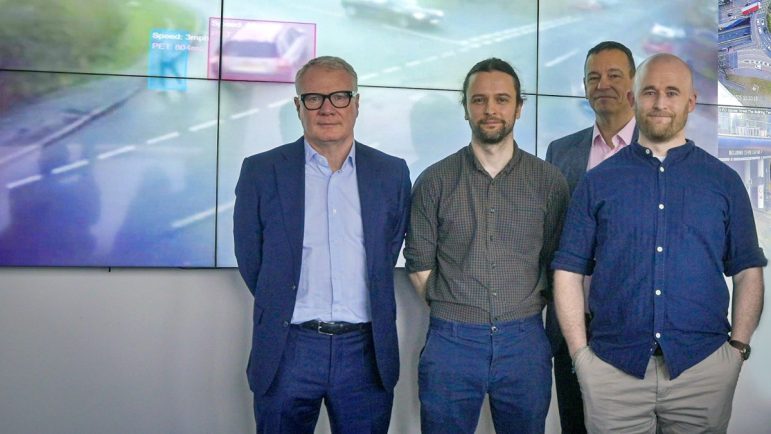
The AI-powered vision sensors work by detecting and recording near misses, such as when a vehicle passes within inches of a slower moving pedestrian or cyclist. This means potential collision hotspots can be identified before someone is hurt.
Traditionally, highway authorities had to use data from actual collisions to identify safety issues, meaning someone generally had to be hurt – or worse – before a danger hotspot could be pinpointed.
At Grange Road, sensor footage from before the refuge was installed showed vehicles stopping just inches from people crossing the road – including a mother with a child in a pushchair and a dog walker.
It is one of 40 sensors that have been installed at junctions across the region as part of a pilot to assess the near miss and smart road safety technology.
TfWM, part of the West Midlands Combined Authority (WMCA), is working with VivaCity, who developed the technology, and local councils to investigate issues and potential solutions at more sites across the region.
Mat MacDonald, the region’s Road Safety Commissioner, said: “It should never take a death or serious injury before we fix roads that are putting people in danger.
“This pilot shows exactly how we can anticipate, measure and mitigate these harms before tragedy strikes for yet another family.”
Cllr Patricia Hetherton, cabinet member for city services at Coventry City Council, said: “By combining AI sensors with practical measures like the new pedestrian refuge, we’ve cut near misses at Grange Road by more than 88 per cent.
“Slowing turning traffic and protecting pedestrians and cyclists shows how technology and local action can work together to save lives and make our streets safer for everyone.”