What “Free” Usually Means, and How to Use It Without Getting Burned
“Free” is rarely free in adult chat markets. It usually means one of three things:
- a limited demo with aggressive upsells,
- a credit system where “free” is just onboarding,
- a data trade where personal information becomes the product.
A review of “free joi ai chat” should focus on cost mechanics, privacy, and how quickly the product turns into a funnel.
The three “free” models users actually encounter
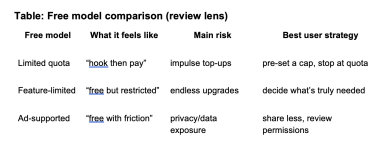
Model A: Limited free messages
You get a small quota, then a hard paywall.
Model B: Feature-limited free tier
Basic chat is free, but “spicy modes,” memory, or faster replies are paid.
Model C: Ad-supported free
The chat is free, but monetization shifts to ads and data collection.
None of these are automatically bad. The problem is when the model is unclear or manipulative.
What a good “free” experience looks like
A respectable free tier is honest:
- clear message limits or feature limits
- stable pricing for upgrades (no moving targets)
- clear subscription renewal details
- visible support and refund terms
- obvious privacy controls and deletion options
What a bad “free” experience looks like
A risky free tier has these behaviors:
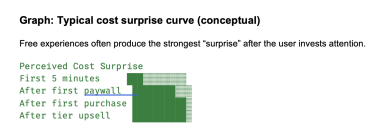
- unclear pricing until the user is emotionally engaged
- urgency language (“unlock now or lose access”)
- guilt prompts (“don’t leave me”)
- constant upsells interrupting the chat flow
- off-platform payment prompts
Practical privacy advice for “free” tiers
Free tiers tend to collect more behavioral data because ads and analytics drive revenue. Use stricter privacy discipline:
- don’t share identifying details
- don’t upload images or voice notes
- keep prompts non-identifying and non-personal
- avoid treating the chat like therapy journaling
Coach advice: keep “free” trials short and structured
A free tier should be tested like software, not like a relationship.
- Session 1: test boundaries and deletion controls (10–15 minutes)
- Session 2: test cost clarity and upsell behavior (10–15 minutes)
- Session 3: test closure (can the session end cleanly?) (10–15 minutes)
If a product fails cost clarity or closure, it’s not worth a paid upgrade.
“Free” and real dating: the motivational trade
The bigger risk isn’t money; it’s motivation. High-stimulation free chat can reduce the desire to take real social risks (messaging a real match, setting up a call). Watch the behavioral signals:
- less interest in going out
- bedtime drifting later
- irritation when the chat is unavailable
- time spent increases week to week
If those appear, the best fix is friction:
- time-box sessions,
- remove bedroom use,
- add one offline plan weekly.
“Free joi ai chat” is a category where honesty and design ethics vary dramatically. A good free tier is transparent, bounded, and safe. A bad one is a conversion funnel disguised as companionship. Treat free as a short audit, not a bond: test policies, test deletion, test pricing clarity, and leave quickly if urgency or moving paywalls appear.