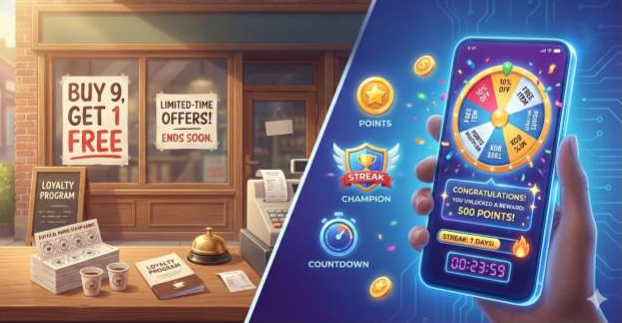
If you’ve ever wondered why a shopping app can feel strangely “moreish”, it’s often because it’s borrowing a few ideas from games. The same little tricks that make people tap “again”; suspense, small rewards, progress bars, show up all over the place now. Slot-style games are among the clearest examples of fast feedback loops, which makes them useful reference points for understanding why many everyday apps feel so engaging. OjoSlots Casino UK is a good example of how these loops are built: quick spins, instant outcomes, and repeatable reward patterns that keep users engaged. The same structure shows up in loyalty schemes, food apps, and discount pop-ups.
And it’s not just “online stuff” either. Even if you’re more of a High Street person, the same logic is baked into modern retail: points, tiers, limited-time perks, and “unlock” style rewards. The difference in 2026 is speed; your phone can nudge you instantly, all day, with personalised prompts that feel casual but add up over time. This article breaks down what’s happening, why it works, and how to keep it fun without getting dragged into buying (or tapping) more than you meant to.
What “slot-style” gamification actually looks like
When people say “gamification”, they usually mean normal things being wrapped in game-like feedback. Slot games are a clear example because they’re built around fast loops: do a thing → get instant feedback → repeat.
You’ll spot the same ingredients in loads of non-gambling spaces:
- Variable rewards: sometimes you get a perk, sometimes you don’t
- Near-miss feelings: “so close” messaging or countdown timers
- Progress meters: bars that fill up (“2 more orders until a reward!”)
- Daily streaks: come back every day to keep your run alive
- Surprise drops: mystery discounts, random “spin” promos, hidden codes
- Flashy feedback: confetti, celebratory sounds, big “win” screens
None of these are automatically harmful. They’re just good at keeping attention.
Why it works so well
The simplest explanation: our brains like surprise rewards.
A predictable reward is fine (buy 9 coffees, get 1 free). But a maybe reward is often more gripping:
- You take an action (tap, buy, play, scroll).
- You get feedback (discount, points, “almost!”, animation).
- Your brain goes: “That was interesting. Do it again.”
Behavioural research consistently shows that unpredictable rewards activate attention systems more strongly than fixed outcomes, which is why even simple app notifications can feel compelling.
That “maybe next time” feeling is powerful because it adds a little suspense. It’s the same reason people refresh a feed or check messages more than they mean to. It’s not deep or mysterious – it’s just how attention works.
Quick reality check: the point isn’t that these systems “control” people. It’s that they’re designed to nudge behaviour in predictable ways.
For anyone using casino-style entertainment online, the UK Gambling Commission’s safer gambling tools outline practical ways to stay in control.
How the high street started copying the phone (and vice versa)
A lot of this didn’t begin online. The high street has been using game-like incentives for years:
- stamp cards
- limited-time promos
- “exclusive member” perks
- prize draws
- “spend £X to unlock Y”
What changed is the speed and the personal targeting.
On a phone, rewards can be:
- instant
- personalised
- repeated daily
- pushed to you with notifications
- tracked in the background without you thinking about it
That makes the loop tighter. And tighter loops tend to win.
The retail angle: why it matters for shops and brands
When shopping starts feeling like a game, it changes what people expect:
- More mini-rewards (points, badges, “unlocks”)
- More urgency (“ends tonight”, “only 3 left”)
- More habit-based buying (streaks, repeat orders, subscriptions)
It also changes how brands compete. It’s not always “best product wins” – it can be “best loop wins”.
As noted in broader reporting, including this look at how slot gaming is impacting retail, many shops borrow these reward-style mechanics because they work and they are simple to measure. The pattern is easy to see. When a small nudge keeps people coming back, businesses lean into it, using these loops as a cheaper and more flexible stand-in for traditional advertising.
Where you’ll notice it outside shopping
This isn’t just retail. Slot-style gamification shows up in:
- Food delivery apps (free delivery streaks, surprise vouchers)
- Fitness apps (badges, streak pressure, “don’t lose your progress”)
- Streaming platforms (autoplay, “next episode in 5 seconds”)
- Mobile games (daily rewards, timed events, “limited skins”)
- Travel and booking sites (“10 people viewing”, “price rising soon”)
The upside and the downside
The upside
- Rewards can be genuinely helpful (money off, freebies, perks)
- Apps can feel more fun and less like chores
- Loyalty schemes can make sense if you’d buy it anyway
The downside
- You buy faster, not better
- You spend to “complete” something (a streak, a reward tier)
- You end up checking an app out of habit, not need
A lot of people don’t mind this. The problem is when it starts working against your own goals – saving money, eating better, spending less time on your phone, or just being less impulsive.
Simple ways to stay in charge of the “reward loop”
You don’t need to quit everything. Small tweaks usually do the job.
For shopping and loyalty apps
- Turn off push notifications for discounts and “streak” reminders
- Use a 24-hour rule for anything you didn’t plan to buy
- Decide your budget first, then shop (not the other way round)
- Unsubscribe from “limited-time” emails if they always tempt you
- Watch for “free” perks that cost spending to unlock
For entertainment that’s designed to keep you looping
- Pick a time limit before you start.
- Take a short break when you hit it.
- If you keep ignoring the limit, change the setup (not your willpower): fewer notifications, fewer triggers, fewer “one more” moments.
That’s the quiet truth with gamification: environment beats motivation most of the time.
Bottom line
Slot-style design didn’t stay in casinos. It spread because it’s effective: small rewards, quick feedback, and a bit of suspense can make almost anything feel stickier – shopping included.
The goal isn’t to be paranoid. It’s just to notice what’s happening so you can choose when it’s fun… and when it’s pulling you around.
And if any gambling-style entertainment is part of your life, keep it as entertainment: set limits, take breaks, and use support tools if it stops feeling in your control. If you ever need it, UK services like self-exclusion and support charities are available for a reason.
Article written by Taylor Wilson