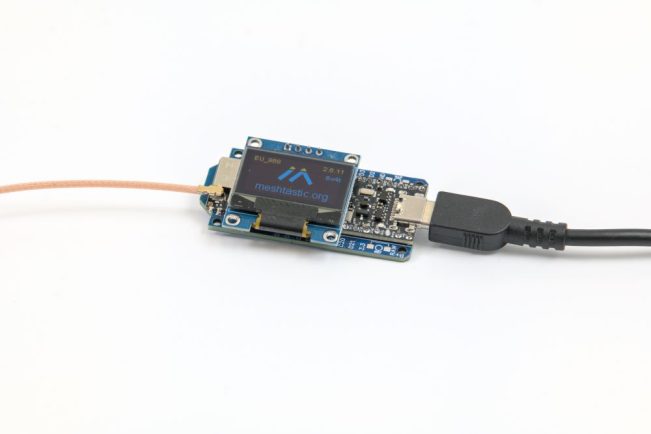
IF YOU’VE never seen Meshtastic in action, the easiest way to think about it is this: it’s like walkie-talkies for text messages — but smarter.
Instead of relying on cell towers or the internet, Meshtastic devices talk directly to each other using long-range radio. When multiple devices are scattered around an area, they form a mesh network that can relay messages across surprisingly long distances.
That alone is cool. But what really matters is how people are actually using it.
Let’s walk through real Meshtastic use cases and why this little off-grid network is gaining so much attention.
Meshtastic Uses for Hiking and Outdoor Adventure
One of the most obvious Meshtastic uses is in the outdoors.
If you’ve ever gone hiking, camping, overlanding, or off-roading, you already know how unreliable cell coverage can be. In remote areas, there’s often no signal at all.
With Meshtastic, each person carries a small node. The device connects to a phone over Bluetooth, and messages hop across nearby nodes using LoRa radio. If your hiking group spreads out across a few miles, you can still coordinate. And if other Meshtastic users are in the area, their nodes might extend your range even further.
There’s no monthly plan, no dependency on infrastructure, and no need for a ham radio license. For backcountry explorers, that’s huge.
Another powerful Meshtastic use case is emergency communication. During natural disasters, traditional infrastructure is often the first thing to fail. Cell towers go down. Internet connections drop. Power grids become unstable.
Meshtastic doesn’t depend on any of that.
As long as nodes have power — many run on small batteries or solar setups — the mesh keeps functioning. Messages automatically hop from device to device until they reach their destination. For preparedness groups and rural communities, this is one of the most practical uses for Meshtastic available today.
What Can You Do with Meshtastic? Exploring Key Features
So what can you do with Meshtastic beyond basic texting?
In rural areas, connectivity gaps are still common. Meshtastic allows local communication within a town or property, private group messaging with encryption, and even sharing simple sensor data like weather conditions.
Events are another great example. At large festivals or conferences, cellular networks often become overloaded. Meshtastic works differently. It relays short messages across its own mesh, independent of the public network. Organizers can coordinate teams and share updates even when everyone else is stuck refreshing their phones.
If you’re thinking about everyday uses for Meshtastic, it really comes down to one idea: communication without infrastructure.
And if you’re wondering what to do with Meshtastic as someone who enjoys experimenting with tech, there’s even more room to explore.
Many nodes support GPS modules, temperature sensors, or humidity sensors. That data can move across the mesh just like regular messages. A quick Meshtastic LoRa mesh project overview would describe it as a decentralized network of small radios that pass information from node to node without relying on a central tower.
If you’ve ever asked yourself, “what can I do with Meshtastic?”, the honest answer is: build your own communication system, test range in different environments, add sensors, experiment with antennas, and learn how decentralized networks behave in the real world. For those ready to start building, Kilo Electronics offers high-quality devices and components perfect for your first Meshtastic node.
Meshtastic for Kids: A Hands-On Educational Tool
One often overlooked angle is Meshtastic for kids.
Instead of just handing them another app, you can show them how communication actually works. A simple Meshtastic LoRa mesh project overview for a student would explain that small devices talk directly to each other using radio, and messages hop across the network until they reach their destination.
Seeing that happen in real life makes abstract ideas like “mesh networking” suddenly make sense.
For a young builder or curious teenager, this can be a great Meshtastic use case. They can assemble a node, connect it to a phone, and watch messages travel across multiple devices. A broader Meshtastic project overview shows how decentralized systems operate without a central provider.
It becomes more than a gadget — it becomes a hands-on lesson in engineering.
Meshtastic: What Is It Used For in Daily Life?
So, Meshtastic: what is it used for in practical terms?
· It’s used for outdoor adventure communication when there’s no signal.
· It’s used for emergency and disaster resilience.
· It’s used in rural and off-grid communities.
· It’s used at events where cellular networks get congested.
· It’s used for experimentation, education, and sensor networking.
At first glance, Meshtastic might look like a hobbyist project. But when you look closer, the range of Meshtastic uses is impressive.
It brings long-distance, encrypted communication into the hands of everyday users without licensing barriers or expensive equipment. And the best part is simple: the more people who join the mesh, the more capable it becomes. If you’re looking to purchase reliable hardware to join the network, check out the selection at https://kiloelectronics.com/en/.
If you’re curious about off-grid communication, exploring Meshtastic use cases might be the perfect place to start.
Article written by David Matthews