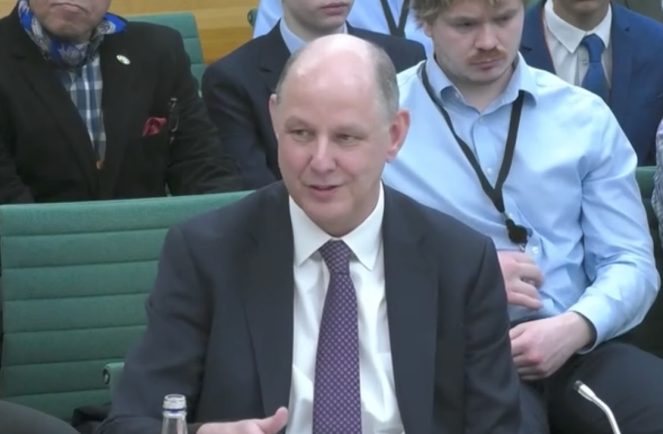
Fresh questions have been raised over the Government’s handling of a key diplomatic appointment, after a senior civil servant said he was told “to get on with” approving Peter Mandelson as ambassador to the United States.
Sir Philip Barton, the former head of the Foreign Office, told MPs this morning he was “presented with a decision” and put under pressure to move quickly, contradicting claims by Keir Starmer that “no pressure existed whatsoever”.
His evidence, given to the foreign affairs committee, is likely to intensify scrutiny of the Prime Minister ahead of a Commons vote on whether he should face an investigation into claims he misled Parliament.
“Told to get on with it”
Sir Philip said he had not been consulted on the decision to appoint Lord Mandelson, despite concerns surrounding the peer’s past associations.
“At no point did anyone consult me, ask me,” he told the committee. “I was presented with a decision and told to get on with it. There was no space, you know that.”
The comments appear to challenge the Government’s insistence that proper procedures were followed throughout.
Timeline under question
The committee also heard that the usual order of events, vetting first, announcement second, was not followed.
“The normal order is vetting and then announcement,” Sir Philip said. “The timing of the announcement was driven and decided by No 10.”
Lord Mandelson’s appointment was announced on December 20, 2024, with vetting only beginning three days later.
Sir Philip said a letter from Downing Street urging officials to proceed “at pace” created pressure to complete checks quickly, particularly ahead of the inauguration of Donald Trump in January 2025.
“That in effect is the top of the Government saying the Prime Minister has decided he wants Mandelson as ambassador and he wants it done in that timescale,” he said.
He added there was “absolutely … pressure to get everything done as quickly as possible”, although he was not aware of pressure on the outcome of the vetting itself.
Concerns raised
Sir Philip also told MPs he had flagged risks linked to Lord Mandelson’s past connections to Jeffrey Epstein, but said there was little engagement from No 10 on those concerns.
“To be honest with you, no one said to me ‘look Philip, the Prime Minister knows there’s some risks around this, can you really, really make sure the vetting’s done rigorously?’,” he said.
“It was: ‘Fine, he needs vetting, let’s make sure it’s done in time’.”
He added that Downing Street appeared focused on meeting its timetable rather than the detail of the vetting process.
Possible inquiry
The row could now move to the Commons. Lindsay Hoyle has said MPs will be allowed to vote on whether the privileges committee should investigate claims that the Prime Minister misled Parliament.
Such inquiries are rare but carry significant political weight, as seen in previous cases involving senior ministers.
Sir Philip also confirmed that questions had been raised within government about whether vetting was needed at all, which he said he found “odd and insufficient”, insisting checks should go ahead.
Political reaction
Opposition figures say the latest evidence raises further questions about the Government’s handling of the appointment and the accuracy of statements made to MPs.
Kemi Badenoch said the issue was about accountability, writing that the vote facing MPs was “a grave test of integrity”.
She argued the situation had arisen not because of political point-scoring, but because “serious doubts” remained about whether proper procedures had been followed.
Ongoing scrutiny
The committee is expected to hear further evidence from senior figures involved in the process, including former Downing Street chief of staff Morgan McSweeney later this morning.
With questions still unresolved, the issue continues to draw national attention, with potential implications for trust in government processes and the standards expected of those in public office.
Downing Street has been approached for comment.