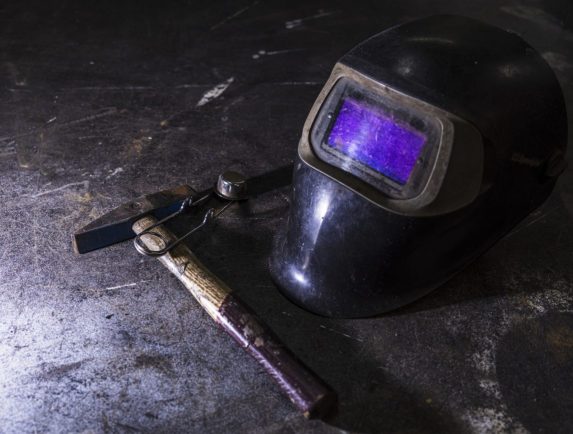
Choosing the right shade level is essential, as your eyes need adequate protection from intense arc light. Many amateur welders think that they can simply take the darkest one, and that is it. This way, they can ensure a high level of protection, but they compromise work quality and efficiency. So, it is more cost-effective to pick a shade level of welding helmets UK that matches the welding type. The right level usually depends on the arc intensity generated by MIG, TIG, and Stick processes.
Recommended Shade Levels for MIG, TIG, and Stick
MIG welding usually requires a mid‑to‑high shade level because the arc is bright and consistent. Shade 10 or 11 is often enough for this type of welding. However, if you are doing work that requires a higher current, you may need 12 or 13 to stay comfortable. Just remember that your goal is to see the weld pool clearly when you choose a suitable darkening.
TIG welding is a bit trickier because it can run at very low current, especially on thin stainless steel or aluminium. At low amps, you may feel comfortable with 8 or 9. However, if you need to weld at a higher current, shade 8 or 9 will no longer be enough, so you may need to move up to 11 or 12.
Stick welding produces one of the brightest arcs, especially if you do it at higher amperages. If you are to use this technique, it is best to buy a helmet with shade 11–13, depending on rod size and heat settings.
How to Choose the Right Shade for Your Work
When you need to choose a shade level, remember to match it to the amperage that you are going to use most often. Manufacturers often provide charts that show the ideal shade for each amp range. Just keep in mind the following when making your choice:
- start with a darker shade, then adjust to lighter for clarity;
- follow amperage‑based shade charts;
- prioritise comfort and eye safety over habit.
If you are new to the welding process, you can also select one of the auto‑darkening helmets, and they will automatically adjust to the arc’s brightness. In such equipment, the range is often from 9 to 13, so you do not need to swap lenses or interrupt your workflow when you need to switch between MIG, TIG, and Stick processes.
Final Thoughts
As you can see, determining the shade level that you need is not a complicated task when you know how each welding process behaves. MIG and Stick need darker tones, while TIG can vary depending on amperage. If you decide to go for an auto-darkening option, make sure to buy it from a reliable brand to ensure stable work and an accurate shade adjustment.
If you want a helmet that handles shade transitions smoothly and reliably, PATON welding helmets are a strong choice. They offer fast reaction times, stable auto‑darkening performance, and shade ranges that suit both amateurs and professionals.
This is a submitted article written by Liubov Rudenko