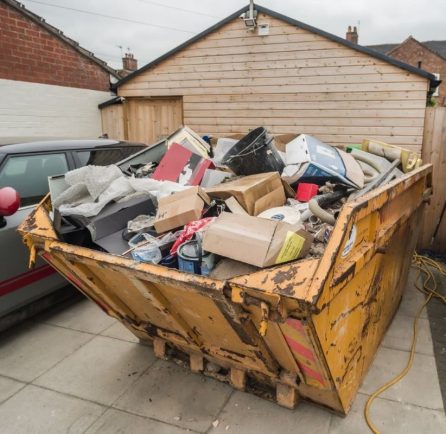
PLANNING to upgrade your kitchen, revamp the bathroom, or build an extension in Coventry this year? You are going to generate a lot of waste. A typical home project produces everything from old furniture and appliances to garden trimmings and heavy soil. You might be wondering where all this rubbish actually goes once you clear it out, after all, it has to end up somewhere.
Depending on what you toss, it could head to a recycling centre, a specialist facility, a green energy plant, or unfortunately, a landfill.
Managing a renovation means juggling budgets and contractors, but sorting out your waste disposal is just as crucial. In this guide, we’ll walk through what happens to your rubbish and help you decide whether to donate, head to the tip, or hire a skip.
When and how to hire a skip?
Hiring a skip is the most recommended option if you have large amounts of heavy or bulky waste, amounts that are not safe to transport in a car. For major projects like an extension, a skip is almost always necessary. Since most of us can’t haul tons of rubble without professional help, it’s no wonder over 17 million skips are hired every year in the UK for domestic use alone.
You can hire a skip easily from either firms operating nationwide or from local businesses. Comparing prices and hiring from major companies that will also offer advice, like Biffa or Tom White Waste, will help you understand capacity limits and any waste restrictions. Companies like Biffa stand out for their years of experience, while new players focus on digitalisation to offer a smoother and easier service, promising to make booking take as little as 60 seconds (as is the case with new providers like, for example, easySkip).
Skips get filled with an enormous variety of materials, from old desks to heavy building rubble and fence panels. You might assume everything tossed into a skip goes straight to a landfill, but that simply isn’t true. Reputable skip hire companies work hard to recycle as much of your waste as possible.
Before it ever reaches a final disposal site, your skip waste goes through a few key stages:
Sorting: All the materials are taken back to the supplier’s site to be separated. First, large items are pulled out by hand. The rest of the pile goes through either manual hand-picking or highly mechanised processes. Machines use trammels (rotating mesh screens) to sift debris by size, blowers to separate out light waste, and magnets to extract metals.
Treatment and processing: After the materials have been sorted, they are broken down further. Depending on the type of waste, they might be screened, shredded, or compacted.
Disposal: At this stage, the waste that was sorted and then processed is ready to be recycled. For example, scrap metal is separated by type, and it is later melted down into new items. Fabrics, topsoil, or aggregates are sent to specialist recycling companies. Some materials, however, cannot be recycled or used in any way. These are classified as residual waste and often used to generate fuel (Refuse Derived Fuel).
What happens to decluttering waste: When is it best to donate?
Contrary to popular belief, your decluttering waste doesn’t always have to end up in a landfill or the local tip. Sometimes, the things you throw away are much more useful than you might realise. When you tear out a kitchen or bathroom, you often uncover working appliances, reusable building materials, or old furniture with plenty of life left in it. You should always aim to recycle or reuse everything you can at this stage.
Donating is a fantastic way to pass on items of value. By donating, you actively reduce the energy demands required to manufacture new products. For example, passing on an old desk and chair uses a fraction of the energy it takes to build new ones from scratch. Treating the environment with care is something we can all easily take part in.
When to take waste to the tip?
The local tip, or Household Recycling and Reuse Centre, is a great option for specific kinds of rubbish. Loading up the car and taking waste to the tip is usually the best choice when you are dealing with smaller amounts of:
Garden waste and cuttings: These can be sent to specialist facilities to create compost for future landscaping projects.
Cardboard and paper: These get processed, baled, and put back into the manufacturing lifecycle.
Building materials: Bricks, concrete, and glass can be recovered and crushed to create sub-base materials for future construction.
Electronics: Old computers and other electrical goods can be safely recycled.
However, doing a tip run means you have to transport everything yourself. Filling your car with messy or heavy items makes the job much harder and risks damaging your vehicle or injuring your back. Plus, keep in mind that local facilities have strict rules about what can go in certain bins, along with heavy restrictions on things like medical waste and plasterboard.
Why ethical waste disposal is so important
Overflowing landfill sites severely damages the environment, making ethical waste disposal more critical than ever. The problem is not just that we are burying trash that will take thousands of years to break down. As this waste slowly decomposes, it creates ground pollution and releases harmful greenhouse gases into the atmosphere. Because this process takes so long, the UK is rapidly running out of physical space to bury rubbish. And the worst and most frustrating part is that a massive portion of the materials currently sitting in landfills could have easily been recycled or reused.
Article written by George