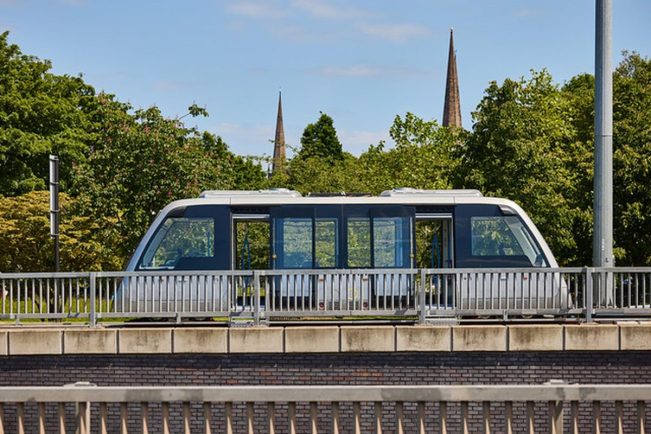
Work has officially started on the Coventry Very Light Rail (CVLR) project, with construction now underway on a 400-metre stretch of Mile Lane, the first of three phases planned for the City Centre Demonstrator Track.
The initial section will see twin tracks laid, with the council sharing the site with Severn Trent Water, which is taking the opportunity to replace ageing water infrastructure before the main rail works begin in mid-July.
Crews are currently milling the road surface and carrying out excavation work to reach the shallow depth needed for the new track slab and rail system.
Once the Mile Lane section is finished, work will move on to Park Road and the car park at Coventry University, with track-laying continuing through 2027 ahead of trials of the prototype vehicle.
The demonstrator is designed to test how quickly and effectively the specially designed slab track can be installed across busy, built-up streets, and how well it performs once vehicles are running on it, including how much noise and vibration it produces. One of the system’s selling points is that many utilities, including gas, power and communications lines, can be left in place thanks to built-in cut-outs and modifications in the slab, potentially cutting the costly diversions that usually come with tram projects.
Alongside the rail works, the council also plans to create a new, safer cycling route linking Coventry railway station with Coventry University.
Councillor Lynnette Kelly, the council’s cabinet member for jobs, regeneration and climate change, said the project could reshape transport in small and medium-sized towns and cities, offering a cheaper and greener alternative to conventional trams while supporting local jobs and housing growth. She said she was “certain people will be super impressed” when the industry visits Coventry in September.
Mile Lane construction is expected to wrap up in autumn 2026, with findings from that phase feeding into planning for the more densely populated Park Road works.
The wider CVLR programme is being funded by the Department for Transport through the West Midlands Combined Authority, and organisers say the aim is to make rail-guided transport more affordable and achievable for other UK cities to adopt.
Those interested in finding out more can visit the project website or contact the team at [email protected].