ACROSS the UK, regional cities are undergoing some of the most significant physical and economic transformations seen in decades. Urban regeneration projects are redrawing the boundaries of what city centres look like, delivering new homes, upgraded transport links, mixed-use developments, and repurposed employment districts where derelict land once sat.
The effects run deeper than new construction. In cities like Liverpool, Manchester, Birmingham, and Leeds, regeneration is directly tied to parliamentary evidence linking such investment to measurable economic growth, increased inward investment, and sustained job creation. What begins as a planning approval frequently ends as a transformed neighbourhood with new residents, new businesses, and renewed city centre activity.
Understanding which projects are driving these changes, and how each city is approaching regeneration differently, reveals a great deal about where the UK’s regional economies are heading next.
How Regeneration Is Changing Cities Now
Urban regeneration is reshaping regional cities through mixed-use development, new homes, upgraded transport links, and repurposed employment districts. The change is not only visual. In Liverpool, Manchester, Birmingham, and Leeds, these projects are influencing economic growth, attracting inward investment, creating jobs, and reviving city centre activity in ways that compound over time. The scale and pace of transformation across these cities reflects a broader shift in how regional UK economies are being planned and built.
The Development Model Behind the Shift
Modern regeneration schemes are more complex to deliver than their predecessors, and that complexity requires coordinated input from developers, local authorities, transport planners, and specialists such as a construction consultancy who help translate masterplans into deliverable projects. Understanding why these schemes are structured the way they are helps explain the outcomes they produce.
Why Mixed-Use Schemes Dominate
Older urban renewal efforts often focused on a single output: housing estates, office parks, or retail centres. Modern urban regeneration works differently. Mixed-use development brings together new homes, workspaces, retail, leisure, and civic uses within the same district, keeping places active across more hours of the day and drawing in a broader range of people.
This approach matters for planning viability as well as city life. A scheme that generates footfall in the morning from workers, the afternoon from shoppers, and the evening from residents is far more financially sustainable than one built around a single use. That economic logic has made mixed-use development the dominant model for large-scale regeneration across regional UK cities.
Why Public Space Now Matters as Much as Buildings
What sets current regeneration apart from previous waves is the weight placed on the public realm. Walkability, civic squares, green corridors, and well-designed streetscapes now feature in planning conditions alongside unit counts and floor space.
Infrastructure improvements and affordable housing are no longer treated as separate obligations to be resolved at the margins. They are built into the development model from the start, shaping how neighbourhoods function once the construction phase ends. Placemaking, in short, has become inseparable from the planning logic that drives regeneration forward.
What Flagship Projects Reveal by City
The four cities most associated with large-scale regeneration each tell a different story, yet they share a common pattern: underperforming land repositioned through phased, mixed-use development to generate new neighbourhoods rather than isolated projects.
Liverpool and Manchester
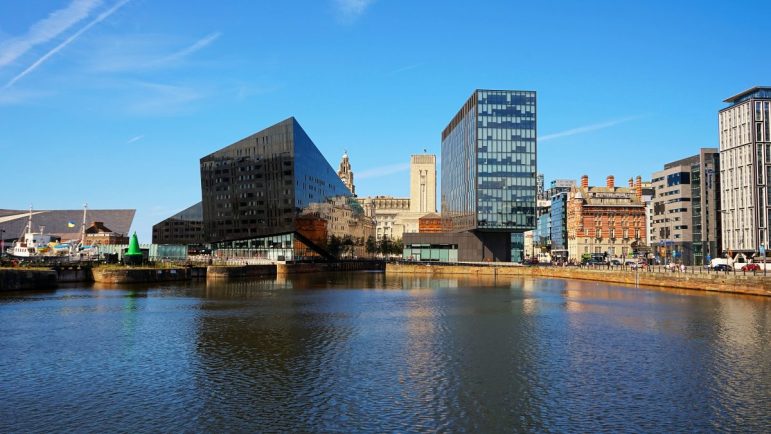
Liverpool and Manchester together illustrate how former industrial land is being repositioned at scale across the north of England. Liverpool Waters, a long-term waterfront transformation along the northern docklands, is converting redundant port infrastructure into a mixed-use district combining residential, commercial, and cultural uses across a considerable stretch of the River Mersey.
Manchester’s pipeline tells a similar story through different schemes. Victoria North represents one of the largest city centre regeneration programmes in the UK, targeting over 150 hectares of largely underused land north of the city core. MediaCityUK, meanwhile, demonstrates how a former industrial site in Salford can be repositioned around creative industries, media, and technology to attract sustained inward investment and employment.
Birmingham and Leeds
Birmingham and Leeds show how transport infrastructure and commercial renewal interact with housing delivery. Birmingham Smithfield is redeveloping the site of the former wholesale markets in the city centre, incorporating retail, leisure, housing, and public realm improvements in a district that had long underperformed its central location.
HS2-linked change is reshaping expectations around Birmingham’s connectivity and the development potential of sites close to Curzon Street, influencing where commercial occupiers and developers are focusing attention. In Leeds, South Bank Leeds is one of the most ambitious city centre extensions in the country, doubling the size of the city centre southward.
Funding models across these cities often layer public and private capital together, a pattern visible in smaller schemes too, such as the city centre south funding package and the related £100m urban renewal scheme, which reflect how regional cities beyond the largest four are applying the same model.
Why These Projects Matter Beyond Property
The outcomes described in the city examples above extend well beyond property values and skyline changes. Regeneration reshapes labour markets, access to services, and the everyday experience of city life, though the distribution of those benefits is rarely straightforward.
Economic and Workforce Effects
Urban regeneration does more than fill vacant land. When schemes are designed with employment and skills infrastructure in mind, they can support meaningful job creation across construction, retail, hospitality, and professional services, contributing to sustained economic growth at the city level.
The most impactful projects connect new development to workforce development, embedding training facilities, employment zones, or educational partnerships into the wider scheme. This links physical transformation to the labour market in ways that can outlast the construction phase and create longer-term city centre demand.
Social Ripple Effects on Daily Life
Beyond employment, urban regeneration reshapes access to everyday life. Better public spaces, improved transport connections, and new community facilities extend the benefits of investment to existing residents, not just incoming ones.
Affordable housing remains one of the more contested dimensions of this process. Regeneration can increase pressure on surrounding areas even as it delivers new supply, and outcomes depend heavily on how schemes are governed and who benefits from the uplift in value. Well-governed programmes that prioritise inclusive design and housing mix tend to produce broader gains, while those focused narrowly on commercial return can deepen existing inequalities rather than ease them.
What Makes Regeneration Succeed at City Scale
Behind every successful regeneration project is a framework that extends well beyond individual planning consents. Large schemes depend on coherent masterplans that sequence delivery across years or decades, reliable transport links that connect new districts to the wider city, and coordinated relationships between public bodies and private developers.
Devolution arrangements shape how much of this coordination is possible. Cities with clearer governance structures and integrated funding packages are better positioned to produce coherent urban change rather than fragmented development that stalls between phases. Infrastructure improvements and inward investment tend to follow where planning frameworks are stable and long-term, and the planning architecture surrounding a scheme is often what determines whether regeneration succeeds at city scale.
Frequently Asked Questions
What Is Urban Regeneration in the UK Context?
Urban regeneration refers to the process of revitalising underused, derelict, or underperforming land and buildings in towns and cities. In the UK, it typically combines housing delivery, commercial development, public realm improvements, and infrastructure investment within a coordinated planning framework, transforming areas that have declined economically or physically.
Why Are Regional UK Cities Seeing More Regeneration Projects?
Devolution, improved funding mechanisms, and stronger local planning frameworks have made it easier for regional cities to attract investment and coordinate large-scale development. Demand for housing, pressure on city centre land, and the need to replace ageing industrial infrastructure have all accelerated the pace of regeneration activity outside London.
Which UK Regional Cities Have the Biggest Regeneration Schemes?
Manchester, Liverpool, Birmingham, and Leeds are currently home to some of the largest regeneration projects in the country, spanning thousands of homes, commercial space, and public realm improvements across multiple phases.
The Bigger Picture for Regional UK Cities
Urban regeneration is not a construction programme with a defined end date. It is a long-term repositioning of how regional cities function, compete, and are experienced by the people who live and work in them.
Physical redevelopment, economic strategy, and public realm investment are not separate tracks. They reinforce one another, and the cities making the most progress are those treating regeneration projects as integrated urban systems rather than isolated schemes. That interconnection is the defining feature of what is reshaping regional cities across the UK today.
Article by Denise Smith