A CAMPUS sculpture by one of Britain’s greatest living artists has been awarded the Public Monuments and Sculpture Association’s Marsh Award for excellence.
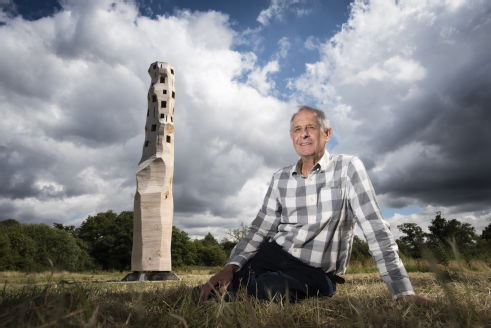
Entitled ‘Habitat’ the artwork, by David Nash OBE RA, was installed in Diamond Wood on Warwick University campus to mark the University’s 50th anniversary last year.
The sculpture, which stands seven metres tall, was carved from an ancient cedar tree that fell during a storm at Portmeirion in North Wales.
Offered for a sculpture installed in a public place, the Marsh Award for Excellence in Public Sculpture is only handed out to those revealed within the last two years.
Mr Nash’s work is sited at the entrance to Jubilee Woods and is designed to become part of the woodland’s eco-system as it weathers and becomes inhabited by birds, bats and insects.
Speaking at an award ceremony in central London, a delighted Mr Nash said he was surprised and pleased for the recognition.
He said: “This project had a natural progression from the invitation to make a proposal.
“From the gale that blow the cedar tree down, to the site that gave birth to the idea, the assistants who helped carve the form, and all those involved in the installation.
“Many projects are fraught with difficulties but ‘Habitat’ had a very smooth path to realization.”
Open to the public, Diamond Wood is part of the Jubilee Woods project which aims to create 60 new woods of 60 acres to mark the Queen’s Diamond Jubilee.
The site features native species including oaks, birch, field maples and hawthorns and incorporates paths and glades that the University hopes local people will use to explore and enjoy the natural environment.
Mr Nash said: “I chose this site for the sculpture to be a signal for the biodiversity Diamond Wood will become in the future.
“The sculpture will change over the years, becoming part of the wood’s eco-system as it weathers and creatures inhabit it.”
Sarah Shalgosky, curator of the University of Warwick, said: “It is wonderful that David Nash’s sculpture Habitat has been given this award.
“It shows commissioning of art is still a vital cultural process and as a result a lot of terrific work is on show and freely available to audiences.”