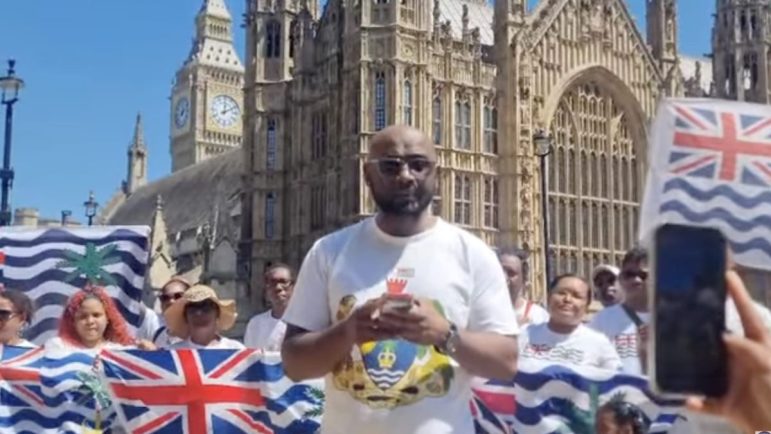
A court has delivered delivered a landmark judgment in a long-running legal battle over the future of the Chagos Islands, in a decision that could significantly alter the position of the Chagossian people for the first time in decades.
The Supreme Court of the British Indian Ocean Territory, presided over by The Honourable James Lewis KC, has ruled that the long-standing legal provision denying Chagossians the right to live in their homeland is unlawful and must be quashed.
The ruling follows a judicial review heard on 13 March 2026 and represents one of the most significant legal developments in the Chagos dispute since the islanders were removed more than half a century ago.
A disputed history
The Chagos Archipelago, a group of around 60 islands in the Indian Ocean, has been the subject of political and legal controversy since the late 1960s and early 1970s, when its indigenous inhabitants, known as the Chagossians, were removed by British authorities.
The islands were cleared to make way for a US-UK military facility on Diego Garcia, the largest island in the group. Families who had lived there for generations were relocated to Mauritius, the Seychelles and the United Kingdom.
Subsequent legal challenges brought by Chagossians have led to a series of court cases over the years, with British courts acknowledging the harshness of the removal, but historically upholding the government’s power to prevent resettlement.
Central to that position was a 2004 Order in Council, introduced under the government of Tony Blair, which removed any right of abode in the territory.
Today’s court’s findings
In its latest ruling, the Court found that this provision could no longer lawfully stand.
The judgment concluded that the exclusion of the right of abode was an unlawful use of executive power, fundamentally undermining the legal basis on which successive governments have relied to prevent Chagossians from returning to the islands.
The Court also quashed removal notices issued to Chagossians currently on the islands, finding that the process by which those decisions were made was procedurally unfair.
Judges found that those affected had not been given a proper opportunity to make representations, nor were adequate reasons provided for the decisions taken.
The case also examined how the government exercised its powers to grant permits to enter the territory. While such powers exist, the Court found they had not been used lawfully in practice, with the system operating as though permission could not realistically be obtained.
Wider political context
The judgment comes at a time of heightened political debate over the future of the Chagos Islands.
The UK government has been in negotiations to transfer sovereignty of the archipelago to Mauritius, while leasing back the strategically important Diego Garcia base.
During the case, the Court referenced the scale of financial commitments associated with such arrangements. The judge noted that, based on available figures and projections, the total cost over time could amount to around £50 billion for British taxpayers, including long-term payments, development funding and related agreements.
The proposed deal has proved controversial in Westminster, with critics raising concerns over both the cost to the British taxpayer and the implications for defence and foreign policy. The Great British PAC has been a key force in campaigning both to keep the islands under British sovereignty and to secure the right of the Chagossian people to return to their homeland.
What the decision means
While the Court has not ordered the establishment of a permanent settlement, legal experts say the ruling represents a significant shift.
By removing the legal provision that excluded the right of abode, the Court has altered the framework within which future decisions must be made.
Any further attempt by the government to remove Chagossians from the islands will now require a lawful process, full consideration of their circumstances, and clear justification.
In practical terms, this makes removal considerably more difficult to sustain.
However, the judgment does not resolve all issues. The government retains powers over immigration and access to the territory, and has already indicated that it intends to appeal the ruling.
Reactions
Misley Mandarin, Interim First Minister of the Chagossian people who is currently on the islands, welcomed the decision.
He said:
“Today justice has finally begun to catch up with history. For generations we have lived with exile, with loss, and with the denial of our most basic rights. This judgment restores not just a legal principle, but our dignity as a people.
We have returned peacefully to our homeland. We ask only to live, to remember, and to belong.”
Claire Bullivant, chief executive of the Great British PAC, which supported the legal case, described the ruling as a “historic victory” and said it fundamentally challenged the government’s long-standing approach to the islands.
What happens next
The government is expected to appeal the decision, meaning the legal process is likely to continue.
Nevertheless, today’s ruling is widely seen as a turning point in a dispute that has spanned generations.
For the Chagossian people, who have spent decades seeking recognition of their connection to the islands, the judgment marks the closest they have come to securing a legal pathway back to their homeland, a homeland many say they wish to remain under British sovereignty.