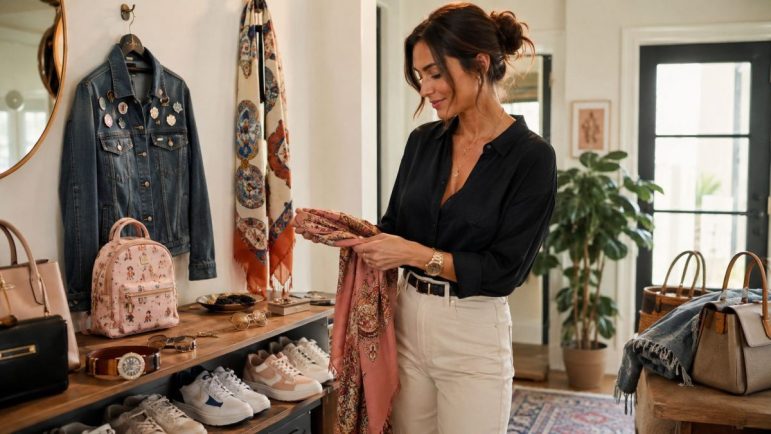
Most people would not describe themselves as collectors. Yet open the average wardrobe and a pattern often appears.
There may be a row of trainers in slightly different colours, a drawer of scarves found on holidays, several watches for different occasions or a growing selection of bags that all seem to serve a distinct purpose.
Pins gather on jackets. Football shirts return every summer. Collecting is often treated as something that happens on shelves or behind glass, but many collections are built to be worn. Over time, they can become one of the clearest ways people develop a recognisable personal style.
The Collector You May Not Know You Are
A collection does not need to contain rare pieces or have a high resale value. It begins when someone repeatedly chooses a particular type of item because it interests them, suits them or carries meaning beyond its practical use.
For one person, that may mean saving for limited-edition trainers. For another, it could be finding silk scarves in charity shops, buying a pin at every concert or holding on to handbags that mark different stages of life.
These habits can feel too ordinary to count as collecting. The items still have a job to do, after all. What changes is the care involved in choosing them and the pleasure of deciding which one belongs with a particular outfit.
Accessories Make Collections Easier to Wear
Accessories are especially well suited to collecting because they can transform an outfit without requiring an entirely new wardrobe. A plain coat can feel different with a patterned scarf. Familiar jeans can take on a new character with bright trainers, a vintage belt or a group of carefully chosen pins.
Recent fashion coverage reflects that appetite for expressive details. Scarves, brooches, distinctive footwear and practical hands-free bags have all appeared in spring and summer accessory trends, showing how smaller items can carry much of an outfit’s personality.
Bags offer perhaps the clearest example. Some collectors favour vintage leather, unusual shapes or designer collaborations. Others rotate colourful totes, printed crossbody bags or Loungefly bags and backpacks inspired by Disney or other fandoms. The attraction is not necessarily completing a set. It may simply be owning several useful objects that each communicate something different.
Personal Style Grows Through Repetition
Fashion is often presented as a constant search for novelty, but recognisable style usually develops through repetition.
Someone who regularly wears colourful trainers begins to be associated with them. A collection of brooches can turn a simple jacket into a signature piece. Scarves tied around the neck, hair or handle of a bag may become a small habit that makes an outfit feel complete.
If you’re interested in building a more cohesive look, exploring guides on developing personal style can offer useful starting points.
The Stories Behind the Things We Keep
Not every collected item is chosen for its appearance alone. Many are connected to places, people or experiences.
Wearing these objects allows memories to remain part of daily life. Their value can remain private while still influencing the way their owner dresses.
This is also why older and second-hand pieces often sit comfortably beside new purchases. A collection does not have to follow one price point, brand or decade. Its consistency comes from the person choosing it. For those interested in this approach, the rise of second-hand fashion highlights how pre-loved items are becoming central to modern wardrobes.
Wearing a Collection Without Letting It Wear You
A collected item tends to work best when it has room to be noticed. That does not mean every look must be restrained. Some people naturally prefer layered patterns, multiple accessories and bold colour. The difference between expressive dressing and an outfit that feels accidental is usually intention.
Practicality matters too. A delicate item may not belong on a crowded commute, while a small bag that looks impressive online may be less useful when it cannot hold everyday essentials. The strongest wearable collections include pieces for real life, not only special occasions.
Trends can introduce new shapes, colours and ways of wearing familiar objects, but collections tend to grow more slowly. They are built through repeated choices, unexpected finds and items that continue to earn their place.
That slower process can be more satisfying than replacing a wardrobe whenever tastes change. A good collection evolves without losing its identity.
The next time someone insists they do not collect anything, it may be worth looking again. The evidence could already be lined up by the front door, folded in a drawer or waiting on a coat hook, ready to shape tomorrow’s outfit.
Article written by Commerce Tuned