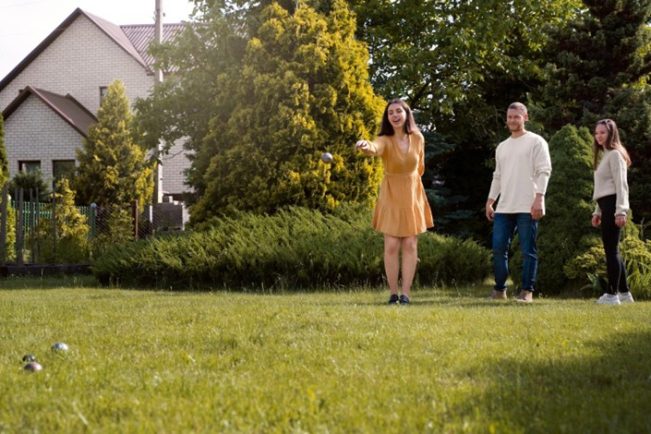
In recent years, the idea of “community” has taken on a renewed sense of importance. Across the UK, including cities like Coventry, people are beginning to reassess how they connect with others in their daily lives. While digital platforms have made communication faster and more accessible, they have also, in many cases, reduced the depth of interaction. As a result, there is a noticeable shift toward simpler, more intentional ways of spending time together.
This shift is not driven by nostalgia alone. It reflects a broader desire for meaningful engagement, experiences that feel grounded, shared, and uninterrupted. In a world where much of life happens through screens, even small moments of in-person connection are starting to carry more weight.
The Subtle Erosion of Everyday Interaction
Modern routines are efficient, but often fragmented. Work, communication, and entertainment are frequently mediated through devices, creating a rhythm that prioritizes speed over presence. Conversations are shorter, attention is divided, and shared time is often replaced by parallel activity.
Over time, this has changed how people experience connection. Being in the same room no longer guarantees interaction. It’s possible to spend hours together without actually engaging in a meaningful way.
This is where simple, structured activities begin to stand out. They create a focal point, something that naturally brings people into the same moment. Whether it’s a card game at the kitchen table or a board game during a quiet evening, these activities encourage participation in a way that passive entertainment cannot.
Why Simplicity Works
One of the key reasons these activities are regaining popularity is their accessibility. They don’t require significant planning, financial investment, or specialized knowledge. Most importantly, they offer a clear structure.
Structure matters more than it might seem. It removes uncertainty and gives people a shared framework to engage within. There’s a beginning, a process, and an outcome. This makes it easier for participants to relax into the experience, knowing what to expect.
However, one of the common barriers is not the activity itself, but the small friction around it. Many people hesitate to initiate games or group activities simply because they are unsure of the rules or how to introduce them smoothly.
That’s where accessible resources become valuable. Playiro site helps bridge this gap by providing clear, easy-to-follow guides for a wide range of traditional games. Instead of spending time figuring things out or worrying about getting it wrong, people can move straight into the experience itself. It’s a subtle support, but one that makes spontaneous interaction far more likely.
Rebuilding Social Habits

Community is not built through large events alone. It is shaped through repeated, everyday interactions. Small gatherings, informal meetups, and shared routines all contribute to a sense of belonging.
In Coventry, as in many other cities, there is a growing appreciation for these smaller moments. They are easier to maintain, more inclusive, and often more authentic than larger, more structured social events.
Reintroducing simple activities into these settings helps reinforce those connections. A regular game night, for example, creates continuity. It gives people a reason to come together, but more importantly, it provides a consistent space for interaction.
According to data from the Office for National Statistics, social relationships and community engagement are closely linked to overall life satisfaction in the UK. People who regularly interact with others in meaningful ways report higher levels of well-being and a stronger sense of belonging. This highlights an important point: connection is not just a social preference, it is a contributing factor to quality of life.
Low-Cost, High-Value Experiences
Another factor driving this shift is practicality. With the cost of living remaining a concern for many households, people are becoming more intentional about how they spend their leisure time. Expensive outings are being replaced, at least in part, by more affordable alternatives that still offer a strong sense of enjoyment.
Simple group activities fit naturally into this context. They require minimal resources but deliver a high level of engagement. More importantly, they scale easily. A small gathering can grow without significantly increasing cost or complexity.
This makes them particularly relevant for families, shared households, and local communities. They offer a way to maintain social connection without adding financial pressure.
The Role of Shared Attention
What sets these experiences apart is the concept of shared attention. Unlike passive forms of entertainment, where individuals engage independently, structured activities bring everyone into a single, shared focus.
This has a direct impact on how people relate to one another. It encourages conversation, collaboration, and even light competition, all of which contribute to stronger interpersonal dynamics.
Shared attention also creates memories that feel more tangible. The experience is not just consumed, it is created collectively. This makes it more likely to be remembered, repeated, and built upon over time.
A Natural Balance Between Digital and Physical
Interestingly, this renewed interest in analog interaction does not mean abandoning digital tools altogether. Instead, there is a growing balance between the two.
Digital platforms still play an important role in enabling access and organization. They make it easier to discover activities, understand rules, and coordinate plans. But the experience itself is increasingly happening offline, in real, shared spaces.
This balance reflects a more mature relationship with technology. Rather than replacing traditional forms of interaction, digital tools are being used to support and enhance them.
The return to simple, shared activities is not a temporary trend. It is a response to deeper shifts in how people value their time and relationships. As daily life becomes more complex, the appeal of straightforward, meaningful interaction continues to grow. Community, at its core, is built through these moments. And sometimes, the simplest activities are the ones that bring people together most effectively.
Article written by Lisa Thomas