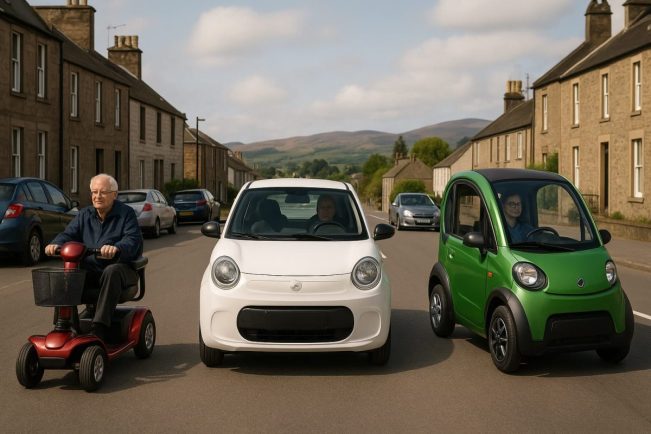
Britain is seeing a marked increase in the adoption of electric vehicles, with compact mobility solutions appearing more frequently on streets from city centres to remote Scottish communities.
Challenging terrain and a rising share of older residents have driven Scotland’s interest in these vehicles, coinciding with increased environmental concerns and the rise of low-emission zones across the country.
While nearly one-fifth of Scotland’s population is now over 65, the wider UK market for electric vehicles is shaped by a mix of corporate and fleet purchases, with private buyer registrations for battery electric vehicles experiencing a recent decline. Compact electric options are viewed as practical for navigating urban congestion as well as catering to those who might find traditional cars difficult or expensive to own and operate. For many Scots, these vehicles present an effective alternative that balances independence, sustainability, and day-to-day practicality.
The market for these compact electric options extends beyond older users. Younger environmentally-conscious consumers are choosing alternatives to conventional vehicles, while those with mobility challenges of all ages seek greater independence. As battery technology improves and charging infrastructure grows across Scotland, these smaller electric vehicles are becoming increasingly practical for everyday use.
Why Small Electric Vehicles Are Gaining Traction in Britain
Recent figures indicate an increase in new car registrations in the UK, with the traditional small car market also experiencing growth. Rising running costs and stricter city emission rules are among the factors driving interest in electric alternatives.
As a direct response, mobility scooters across Scotland and other compact electric vehicles are being adopted by residents seeking cost-effective travel options.
Low emission zones and stricter environmental standards continue to drive compact EV adoption across British urban areas.
Demographic trends influence both product design and marketing approaches. Manufacturers respond with compact electric vehicles that are easier to handle and maintain. Retailers in Scotland tailor demonstration services for users who prioritise safety and reliability.
Market research shows this trend is not limited to urban areas. Rural communities across Britain, particularly in Scotland with its varied terrain, are seeing increasing use of compact electric vehicles.
The Mobility Scooter Market in Scotland
Market Size and Growth Trends
Scotland’s mobility scooter market is expanding rapidly, representing a growing share of the UK’s multibillion-pound mobility aid sector.
An ageing population makes mobility scooters vital tools for independence in Scotland.
Beyond cities like Glasgow and Edinburgh, rural communities across Scotland use mobility scooters as essential alternatives to limited public transport.
Key Consumer Demographics and Needs
While older adults remain the primary market for mobility scooters in Scotland, the user base is diversifying. People with temporary mobility issues increasingly turn to these vehicles as short-term solutions. Younger adults with disabilities also form a growing segment of users seeking greater independence.
As mobility scooters evolve into lifestyle products, consumers now prioritise style, comfort and tech features like USB charging ports. This shift reflects how mobility scooters are now seen as lifestyle products rather than purely medical devices.
Scotland’s unique weather and terrain create specific product requirements. Vehicles must withstand frequent rain while providing stability on varied surfaces. Models with better suspension and weather protection are particularly popular in rural Scottish communities.
Price sensitivity is high, with mobility scooters more affordable than electric cars. Retailers attract buyers through payment plans spread over one to three years.
Crossover Opportunities for Motor Trade Businesses
Business Model Adaptation
Traditional automotive businesses are finding new possibilities to partner with the mobility sector. Car dealerships already possess many of the skills needed to expand into mobility products, including showroom space and customer service experience.
Entering the mobility market requires specific credentials. The British Healthcare Trades Association (BHTA) and Trading Standards Institute (TSI) accreditations are important for establishing credibility. These certifications show commitment to ethical business practices.
Existing automotive business models can shift smoothly to include mobility products. Sales staff familiar with vehicle features can transfer these skills to mobility scooters with minimal additional training. Service departments can expand to include maintenance for these smaller vehicles.
Future Trends Shaping the Small EV Market
Technological advances are quickly changing small electric vehicles. Battery technology continues to improve, with newer lithium-ion systems offering greater range. The UK’s public charging infrastructure has expanded significantly in recent years, with tens of thousands of charging points now available across the country.
Integration with smart city infrastructure is affecting the market as well. Some newer models feature GPS tracking and smartphone connectivity. These features make small electric vehicles more practical for everyday use and increase their appeal to tech-savvy consumers.
Government policies, including the UK’s 2050 net zero target and Clean Air Zones in Scottish cities, reshape travel habits.
To qualify as an approved mobility aid retailer for NHS procurement, organisations must hold BHTA accreditation. Local authorities are also including wider pavement access and improved drop-kerbs in new urban planning guidelines to support small electric vehicles.
Consumer preferences are changing, with increasing demand for vehicles that combine practicality with style. As designs modernise, mobility scooters are shedding their former stigma and gaining broader appeal among style-conscious users. Younger users especially seek options that match their personal style.
As electric and mobility vehicles become smaller, smarter, and more accessible, both Scotland and the wider UK are embracing a new transport future. Whether driven by demographics, geography, or sustainability goals, this shift highlights the need for inclusive, cost-effective solutions. From city streets to rural islands, compact EVs and mobility scooters are no longer niche – they are reshaping how people move. For businesses and communities alike, the opportunity is not just electric, it’s transformative.