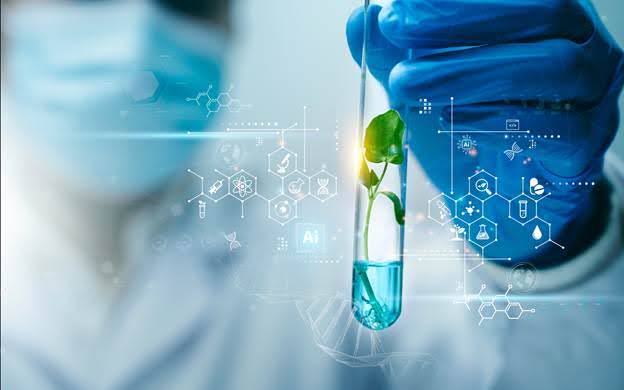
Idiopathic pulmonary fibrosis (IPF) is a rare disease characterized by lung tissue stiffening and thickening for unclear reasons. Affecting up to 22 in every 100,000 people worldwide, IPF causes people to struggle with breathing and worsens as it persists. There has been no known cure for the disease—until recently. (1)
Enter rentosertib, a newly named drug that has shown promise in clinical trials by blocking an overactive enzyme that causes IPF. The drug just came out of its Phase 2A clinical trials, which deemed it “safe and well-tolerated.” It’s poised to enter Phase 3 soon (no date as of this writing), the last stage before it’s evaluated for public use.
If successful, rentosertib will go down in medical history not just as the first treatment for IPF. More importantly, it’ll be the first drug designed using artificial intelligence (AI). Then again, AI-driven drug discovery and development isn’t entirely new—including its impacts.
Hastened Health Response
The COVID-19 crisis marked a milestone in global health response, particularly the speed at which a vaccine became ready. The typical timeline for vaccine development was from 10 to 15 years, but the first vaccines were prepared in less than a year. This is attributed to several factors, from close collaboration among parties to leaps and bounds in vaccine technology. Yet, one key player that doesn’t get as much credit is the use of AI.
In a paper published in Infectious Medicine last year, researchers at Huazhong Agricultural University in China stated that AI played several roles. Some of these include: (2)
- Identifying the active COVID-19 variant (e.g., Omicron)
- Predicting how the disease progresses in the patient
- Distinguishing COVID-19 from pneumonia via CT scans
- Developing algorithms for gauging a patient’s current risk
- Repurposing currently available drugs to treat the disease
Because of these, treatment was able to keep up with the virus and its rapid mutation. As COVID-19 remains a risk, modern medicine now has the tools and, more importantly, the data to prevent another global health crisis or, if it does happen, end it as soon as possible.
It won’t be surprising if AI technology in drug discovery and development becomes more prevalent in light of the crisis. Its accuracy and security are too important to pass up, especially given how a health crisis can paralyze the world. One can harness AI for a range of processes, from simplifying clinical trial design to overcoming regulatory challenges.
Precision Medicine for Cancer
For the cover story on its weekly newsletter last July, The Economist ran a story that talked about how the world was winning the fight against cancer, and they’ve got figures to back it up. (3)
- A decline in smoking rates since 1975 has helped prevent more than three million cancer-related deaths in the U.S.
- Cervical cancer rates among females in their 20s have dropped by 90% since the U.K. government rolled out a new HPV vaccine in 2008.
- Diabetes drugs like Metformin and Ozempic have shown promise in reducing the risk of breast cancer recurrence.
Nevertheless, cancer continues to be a bane of human existence, claiming the lives of millions globally. One reason treatment has been hard is that cancer isn’t just a single disease, contrary to popular belief, but rather tens of diseases occurring simultaneously. Also, some cancer cells adapt and multiply too fast for treatment to catch up.
Cancer treatment has long been limited to chemotherapy, but there’s growing interest in more precise approaches. Fortunately, AI is all about being as precise as its code allows.
One application is precision oncology, which involves crafting a treatment plan based on the tumor’s genetic profile. In 2024, following a Phase 3 trial failure of a lung cancer drug, AstraZeneca used an AI model to determine what went wrong. The result is an AI-derived biomarker that nearly doubled drug efficacy compared to the original. (4)
The drug, later marketed as Datroway, achieved clinical successes and was approved for breast cancer treatment. (4)
Although a true cure for cancer (in the conventional sense) is still far off, employing AI for drug discovery has advanced oncology by leaps and bounds. Biotech companies are seeing the benefits of using AI tools to create an effective drug, regardless of the form the cancer takes and the organ it targets.
Antibiotics That Kill ‘Superbugs’
If the war against cancer is going well, the same can’t be said against “superbugs.”
In a study of blood samples from ill babies across South and Southeast Asia, researchers from the University of Sydney School of Public Health discovered an alarming rise in rates of neonatal sepsis. Of roughly 15,000 samples taken, 14% were positive for bacteria that had shown to be resistant to doctors’ first choice of antibiotics. (5)
While experts state multiple reasons for antimicrobial resistance (AMR), one major factor is antibiotic misuse. Prescribing or using these drugs is overkill in most situations, namely when traditional drugs work. Sometimes, they’re taken to treat the wrong illness, such as the flu (which is caused by a virus, not bacteria).
Fortunately, drug development doesn’t stop even for AMR. Last August, researchers at the Massachusetts Institute of Technology (MIT) designed new antibiotics that could eradicate drug-resistant gonorrhea and MRSA. They did it by training an AI model with data on the bacteria’s structure and their reaction to drug compounds. (6)
Commenting on the study, Dr. Andrew Edwards of the Fleming Initiative told the BBC that it held “enormous potential.” That said, he also stressed that there’s still a long way to go. (6)
Conclusion
AI has grown to be too important a tool to be ignored for drug discovery and development. Diseases are evolving at an unprecedented rate, and only AI has the computing power and precision to catch up to them. To that end, the technology should be involved every step of the way toward better patient outcomes.
References:
1. “Incidence and prevalence of idiopathic pulmonary fibrosis: a systematic literature review and meta-analysis”, Source: https://bmcpulmmed.biomedcentral.com/articles/10.1186/s12890-025-03836-1
2. “Innovative applications of artificial intelligence during the COVID-19 pandemic”, Source: https://www.sciencedirect.com/science/article/pii/S2772431X24000091
3. “The world is winning the war on cancer”, Source: https://www.economist.com/leaders/2025/07/17/the-world-is-winning-the-war-on-cancer
4. “As AI Dawns in Precision Oncology, 2025 Expected To Be a ‘Turning Point’”, Source: https://www.biospace.com/drug-development/as-ai-dawns-in-precision-oncology-2025-expected-to-be-a-turning-point
5. “Pathogen distribution and antimicrobial resistance among neonatal bloodstream infections in Southeast Asia: results from NeoSEAP, a multicentre retrospective study”, Source: https://www.thelancet.com/journals/lanwpc/article/PIIS2666-6065(25)00154-3/fulltext
6. “AI designs antibiotics for gonorrhoea and MRSA superbugs”, Source: https://www.bbc.com/news/articles/cgr94xxye2lo
Article by Editorial team.