Environmental standards are tightening across Coventry and Warwickshire, and manufacturers are feeling it. Inspections are more detailed. Reporting has to be clearer. Regulators expect solid evidence that discharge limits and chemical controls are consistently met.
Rough estimates and occasional checks are no longer enough. Testing needs to be regular, recorded properly, and easy to trace back if questions arise. Reliable laboratory equipment sits at the centre of that process. Accurate measurement of acidity, chemical concentration, and moisture levels gives businesses confidence during audits. Firms that treat testing seriously tend to face fewer surprises.
Regulation is unlikely to ease. Companies that adjust early usually avoid disruption later.
Why Environmental Compliance Is Becoming More Demanding
Expectations from regulators and customers have shifted. Greater attention now falls on how manufacturers monitor waste, manage chemicals, and document results.
Increased Monitoring and Reporting Expectations
The Environment Agency requires detailed monitoring of effluent before it leaves a site. Strict limits apply to pH levels, heavy metals, and chemical residues. Inspectors often ask to see full testing histories rather than summary sheets.
A practical response involves reviewing how often samples are taken and how results are logged. Regular testing of wastewater, raw materials, and finished goods reduces the risk of unexpected readings. Clear digital records help demonstrate control. When data is organised and easy to access, inspections tend to run more smoothly.
Local automotive suppliers, food producers, and chemical processors all operate under similar pressure. Strong internal systems make that pressure manageable.
Strengthening Internal Laboratory Controls
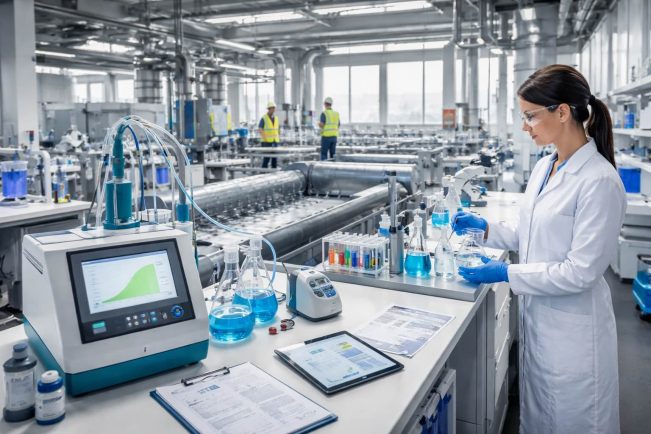
Laboratory teams play a key role in keeping operations compliant. Many facilities use a titrator to measure acidity or alkalinity in water samples. Consistent calibration keeps readings accurate. Routine maintenance prevents small technical issues from turning into bigger problems.
Training matters as much as equipment. Technicians should feel confident handling samples, interpreting results, and recording data correctly. Regular refresher sessions help teams stay aligned with regulatory updates.
Clear procedures, steady oversight, and reliable tools create a stable foundation. That stability reduces stress when inspection notices arrive.
How Modern Laboratory Equipment Improves Accuracy and Efficiency
Laboratory technology has progressed quietly but significantly. Automation and smarter software now support faster analysis and better record-keeping.
Reducing Human Error Through Automation
Manual testing can vary depending on who performs it. Even small differences in technique may affect results. Automated systems remove much of that variation. They control reagent dosing, digitally detect end points, and automatically store results.
Manufacturers looking to tighten compliance should examine how much time their teams spend repeating tests. Rework costs money and slows production. Automated titration systems deliver consistent measurements and reduce the need for duplicate analysis.
Staff often notice the difference quickly. Fewer repeated tests mean smoother workflows and less frustration.
Improving Traceability and Workflow
Modern systems connect easily with laboratory information management software. A titrator linked to digital records creates a clear audit trail for each sample. Dates, operators, and batch references remain attached to every result.
That level of traceability reassures inspectors and internal quality teams alike. Managers gain quicker access to trends, enabling them to spot changes early. Faster results allow production adjustments before limits are breached.
Ease of use should not be overlooked. Equipment with clear interfaces and guided methods shortens training time and improves confidence across the team.
Supporting Midlands Industry with Advanced Titration Systems
Regional manufacturers often run multiple production lines or operate across multiple sites. Consistency becomes essential. Standardised testing equipment helps maintain comparable results across departments.
Selecting the Right Analytical Tools
Potentiometric titration is widely used to measure acidity and alkalinity with reliable endpoint detection. Karl Fischer systems focus on moisture content, which affects product stability and storage conditions. Coatings manufacturers, food processors, and chemical plants all rely on accurate moisture control.
Laboratories that want dependable performance often turn to systems such as Metrohm titrator equipment to support environmental monitoring and quality checks. Choosing suitable equipment means considering sample type, testing volume, and reporting requirements. Access to technical support and calibration services also influences long-term performance.
Purchasing decisions benefit from input across departments. Laboratory staff understand day-to-day needs. Quality managers focus on compliance. Finance teams review costs over time. Balanced discussions lead to better outcomes.
Maintaining Performance Over Time
Even high-quality systems need attention. Regular checks confirm that measurements remain within acceptable limits. Internal validation builds confidence in reported data.
Monthly reviews of laboratory trends can reveal gradual shifts. Small changes in acidity or moisture levels sometimes signal process issues elsewhere in production. Early detection allows quick adjustments.
Technology works best when paired with clear procedures. Documented methods, scheduled servicing, and accountable oversight keep systems reliable year after year.
Building Stronger Links Between Local Education and Industry
Coventry and Warwickshire benefit from close ties between education providers and manufacturers. Those links support both innovation and compliance.
Developing Skilled Laboratory Technicians
Graduates entering technical roles often bring current knowledge of analytical chemistry and automation. Placement schemes and collaborative projects help bridge the gap between theory and practice.
Employers who invest in ongoing training see steady improvements in testing accuracy. Refresher courses on equipment use, safety standards, and data integrity keep skills sharp. Confident technicians are less likely to make avoidable errors.
Apprenticeships also contribute to long-term stability. Growing talent locally reduces reliance on external consultants and builds in-house capability.
Encouraging Regional Partnerships
Collaboration with institutions such as Coventry University or Warwick Manufacturing Group can open access to specialist facilities. Joint research projects sometimes uncover process improvements that reduce chemical waste or water usage.
Shared knowledge benefits both sides. Businesses gain fresh insights. Students gain practical experience. Stronger technical foundations across the region support higher environmental standards overall.
Strengthening Environmental Performance Through Smarter Investment
Environmental compliance affects more than inspection outcomes. It influences operational stability and reputation.
Assessing Risk and Setting Targets
Management teams should review areas that carry higher environmental risk. Wastewater discharge points, chemical storage areas, and stages involving reactive materials should be closely monitored.
Clear targets help guide improvement. Reduced variation in effluent readings or lower chemical consumption can signal progress. Reliable data enables managers to realistically track those goals.
Internal audits offer another layer of reassurance. Comparing recent results with historical data highlights patterns that might otherwise go unnoticed.
Linking Investment to Long-Term Stability
Laboratory upgrades require careful thought. Equipment must match operational needs and integrate with existing systems. Service agreements and calibration support should form part of the discussion.
Well-planned investments reduce repeat testing, limit waste, and strengthen documentation. Over time, those improvements support steady compliance and smoother inspections.
Preparing Your Site for Stricter Environmental Checks
Environmental expectations across the Midlands are unlikely to ease. Manufacturers that treat testing as a central business function position themselves more strongly.
Steady attention to measurement, documentation, and staff capability builds confidence. Local firms that invest thoughtfully in laboratory technology protect operations, strengthen relationships with regulators, and reinforce the region’s reputation for responsible manufacturing.