Material Handling and Transportation
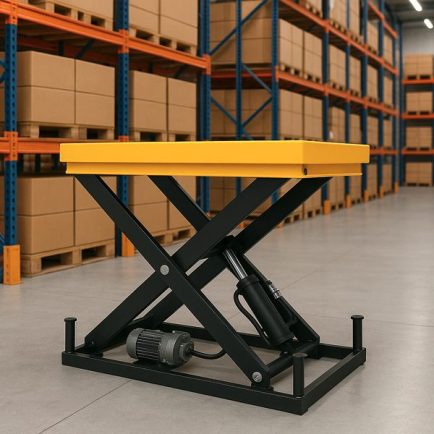
One of the most common industrial uses for scissor lift tables is streamlining material handling and transportation within warehouses and manufacturing facilities.
These tables allow workers to raise and lower heavy loads with ease, minimizing manual lifting and reducing the risk of injury. By efficiently moving pallets, containers, or equipment between different heights and locations, scissor lift tables directly contribute to improved warehouse efficiency.
Their ability to quickly position materials at ideal working levels speeds up order fulfillment and restocking processes. In addition, integrating scissor lift tables into daily operations supports better inventory management, as products can be accessed, sorted, and stored more systematically.
Ultimately, these tables help facilities move goods safely and efficiently, ensuring smoother workflows and enhancing overall productivity without unnecessary delays.
Assembly Line Support
When precision and speed are critical, scissor lift tables provide essential support on assembly lines by keeping workpieces at ideal heights for technicians.
This adjustability guarantees that workers can maintain ergonomic positions, reducing fatigue and the risk of injury while assembling components.
Scissor lift tables help streamline assembly line efficiency by minimizing unnecessary movement and creating a smoother production workflow.
Loading and Unloading Operations
Beyond assembly lines, scissor lift tables play a significant role in loading and unloading operations across various industries.
These tables are essential for streamlining cargo handling by raising or lowering goods to the ideal height, reducing manual lifting and the risk of injury. In bustling warehouses and shipping docks, scissor lift tables help workers move heavy pallets or equipment smoothly between trucks and storage areas.
By providing a stable, adjustable platform, they greatly enhance dock efficiency, allowing faster turnaround times and minimizing bottlenecks. Operators can align freight with loading bays or conveyor systems, ensuring safe and precise transfers.
With their reliability and adaptability, scissor lift tables have become indispensable tools for businesses aiming to optimize cargo movement and maintain a safe working environment.
Maintenance and Repair Tasks
Whether it’s servicing heavy machinery or accessing elevated components, scissor lift tables offer a safe and stable platform for maintenance and repair tasks. Their adjustable height allows technicians to reach various machine parts and facility fixtures without resorting to ladders or makeshift solutions. This greatly reduces the risk of workplace accidents and injuries.
In preventive maintenance routines, scissor lift tables enable workers to efficiently inspect, clean, and lubricate equipment, promoting long-term reliability. When urgent equipment repair is needed, these tables provide immediate elevation, minimizing downtime and keeping operations running smoothly.
Their mobility and ease of positioning mean that they can be quickly relocated to different areas, supporting multi-tasking and rapid response across industrial settings. Overall, they’re indispensable for efficient facility upkeep.
Ergonomic Work Positioning
By allowing workers to adjust the platform height to their exact needs, scissor lift tables play an essential role in promoting ergonomic work positioning. This flexibility minimizes awkward postures and repetitive strain, helping workers maintain healthier body mechanics.
An ergonomic design is vital in environments where tasks require frequent lifting, positioning, or assembly at various heights. Scissor lift tables reduce the need for bending, reaching, or stretching, which are common causes of workplace injuries. Companies that invest in these tables demonstrate a commitment to worker safety and efficiency.
With ergonomic work positioning, productivity rises because employees can focus on tasks rather than discomfort or fatigue. Ultimately, scissor lift tables are a practical solution for industries seeking to optimize workflow and protect their workforce through better ergonomic design.