In the logistics industry, the safety of employees is paramount. So, it’s not surprising that safety regulations are evolving every year – this is just a response to industry growth, technological advancement, and persistently high injury rates in warehousing operations.
Unfortunately, this growth has been accompanied by concerning safety statistics. In 2022, the transportation and warehousing sector recorded the highest Days Away Restricted or Transferred (DART) rate, at nearly 5%, significantly exceeding rates in other industries. Therefore, warehouse and logistics safety best practices were not followed.
This raises a key question: what do companies need to know when it comes to warehouse safety regulations? Read on for more.
OSHA’s National Emphasis Program (2023-2026)
In July 2023, the Occupational Safety and Health Administration (OSHA) launched a National Emphasis Program focused on warehouse safety that continues through 2026. So what does it mean?
In simple words, this program increases inspection frequency at warehouses, fulfilment centres, and related facilities. In particular, it focuses on powered industrial vehicle operations, material handling procedures, storage facilities, walking and working surfaces, and egress and fire safety measures.
For example, where heat or ergonomic hazards are present, OSHA conducts comprehensive health inspections. In fact, it may expand to other areas where industry-standard safety measures require improvement.
Regional Emphasis Program for Warehousing Operation (2022-2027)
Running parallel to the National Emphasis Program is OSHA’s five-year Regional Emphasis Program for Warehousing Operation, which began in August 2022.
In this case, the program combines education and outreach. There is targeted enforcement through comprehensive facility inspections, programmed (randomly selected) and unprogrammed (triggered by reports or complaints.)
EU-OSHA Strategy 2025-2034
The European Agency for Safety and Health at Work (EU-OSHA) has implemented a comprehensive strategy for 2025-2034 with three key priorities relevant to warehouse operations.
These include: anticipating and managing change in digital transitions, improving prevention of work-related accidents and striving toward zero work-related deaths, as well as increasing preparedness for health crises.
General Product Safety Regulation (GPSR)
From December 13, 2024, the EU’s General Product Safety Regulation (EU) 2023/988 replaces the previous General Product Safety Directive.
This regulation impacts warehousing operations by applying to all products (new, used, repaired, or reconditioned) made available on the European market, establishing clear identification requirements for economic operators in the supply chain, and creating new rules for providers of online marketplaces.
Forklift Operation Safety
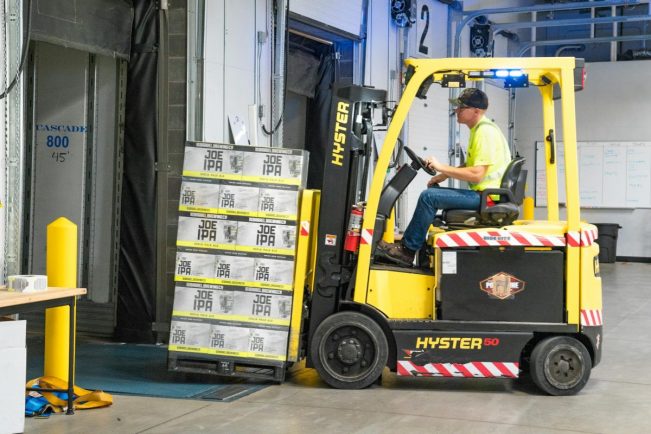
Forklift safety remains a critical concern, with accidents resulting in over 7,200 nonfatal injuries in 2020 and 70 work-related fatalities in 2021.
Warehouse operators must ensure that all forklifts and industrial vehicles meet required safety standards, clear travel paths are established, proper employee training is provided, and battery rooms for electric forklifts have adequate ventilation and nearby emergency stations.
Environmental Compliance
New environmental regulations affecting warehouses in 2025 include the Clean Air Act Amendment, which provides stricter emission standards for trucks and equipment.
Greenhouse gas reduction initiatives potentially require energy efficiency measures or the adoption of renewable energy, as well as enhanced waste management regulations affecting disposal and recycling procedures.
Implementing Effective Safety Programs in 2025
EU guidelines outline a comprehensive risk assessment approach applicable to warehouses worldwide:
- Identify all potential risks (dangerous substances, slippery floors, unsafe equipment)
- Evaluate risks based on likelihood and severity
- Eliminate or reduce risks through preventative measures
- Document the assessment with identified risks, affected workers, and planned measures
- Review assessments regularly to account for changing circumstances
- Collect relevant data, including accident information
Remember, special attention must be given to vulnerable workers, including pregnant employees, older workers, and those with disabilities.
As we navigate 2025, warehouse safety regulations continue to evolve in response to industry growth, technological advancement, and persistent safety challenges. Companies must stay informed about regulatory changes, implement comprehensive safety programs, and leverage new technologies to protect workers and ensure compliance.