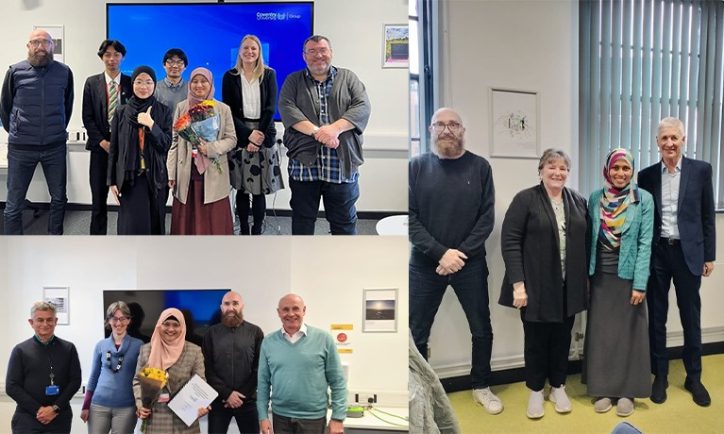
COVENTRY University PhD students and researchers are developing digital solutions to widen access to healthcare in poorer countries.
According to data, over half of the worlds population is lacking essential health services, which is why Luh Haryanthi, Sri Sari Padma, and Ainul Mardiah are creating technologies for Indonesia.
They are supported by researchers from the university’s Centre for Intelligent Healthcare and its digital health social enterprise spin-out, Hope 4 The Community CIC (H4C).
The scheme uses data and H4C’s software solutions to develop self-management programmes that support patients facing health issues.
Luh Haryanthi’s research focuses on supporting women who have breast cancer through a programme designed to enhance quality of life and spiritual well-being.
The iQalb programme incorporates religious and spiritual activities into breast cancer self-management, including displays of gratitude and goal setting.
It is developed from literature reviews and assessments from patients, health professionals and Islamic clergy.
Sri Sari Padma created HOPE4Schizophrenia, a programme designed to support schizophrenia recovery.
The programme uses optimism, identity and empowerment which encourages people to take an active role in their recovery.
Supported by research funding from the Faculty of Medicine at Universitas Diponegoro, Sri plans to conduct a randomised controlled trial to further investigate hoe effective it is.
Ainul Mardiah, developed Shifa – an online integrated Islamic spiritual programme tailored for adolescents and young adults living with cancer.
Alongside cancer patients, healthcare providers and religious leaders Ainul developed the programme to ensure alignment with Indonesian cultural and religious values.
Professor Andy Turner, director of studies and H4C co-founder, Coventry University said: “The positive feedback showcases our candidates’ strong academic rigor in developing innovative digital interventions for breast cancer and schizophrenia.
“I look forward to future collaborations as they broaden these programmes to benefit more people in Indonesia.”