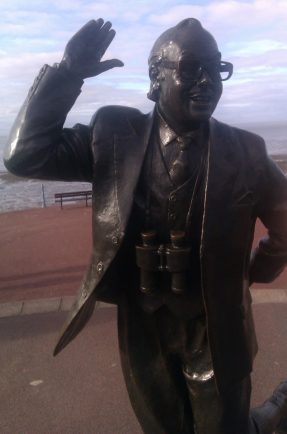
A UNIVERSITY of Warwick researcher has explored sculptures from around the country for International Sculpture Day.
While social media debates the anatomical accuracies of ancient Greek statues private parts, Dr. David Wright of the University of Warwick’s Centre for cultural and media policy studies ventures into a distinctly British exploration: the world of British comedy immortalised in sculpture.
This International Sculpture Day, Dr. Wright embarks on a journey through England’s towns and cities, where statues of beloved comedians stand tall, etching their legacy into the nation’s cultural fabric.
From the infectious laughter of Eric Morecambe to the quick-witted charm of Victoria Wood, these sculptures serve as enduring monuments to the indispensable role of comedy in British society.
In his latest paper, Dr. Wright delves into the debates surrounding nostalgia, popular culture, and heritage, showing the cultural and political significance of the statues in the contemporary landscape.
Dr. Wright, said: “These sculptures not only celebrate entertainment icons but also serve as poignant markers of collective memory, belonging and identity.
“Sculpture – and especially representational statues of specific people – can be seen, in artistic terms, as an ‘old-fashioned’ form.
“Yet there is still a drive to commemorate and celebrate people in these ways.
“As we celebrate the art of sculpture, we should also reflect on its power to provoke thought, inspire dialogue, and illuminate the complexities of our shared heritage.”
The research also looks into the socio-political landscape of Britain and dives into regional inequality and political identity.
The statues use humour to reflect persistent myths of northern working-class life and expose class inequalities.