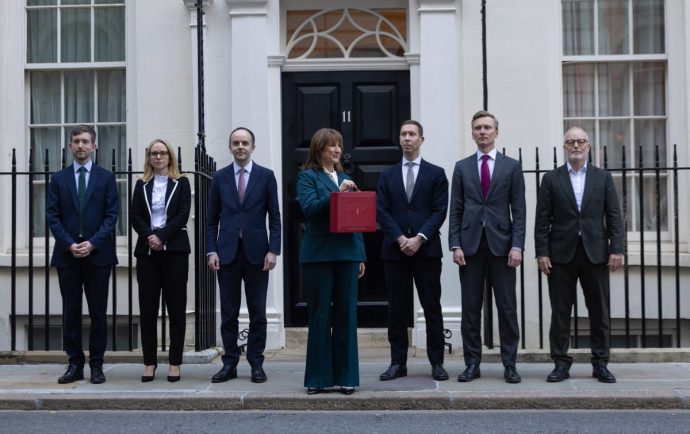
Tax rises deepen as Labour shifts more funding toward welfare, say opposition parties, while Reeves argues the measures are necessary to stabilise the economy.
Rachel Reeves has delivered her second Budget with a package of sizeable tax increases, extended fiscal tightening and welfare reforms that critics say expose significant gaps between Labour’s campaign promises and its actions in government.
The statement came under immediate political pressure after the Office for Budget Responsibility accidentally published its forecasts early, revealing details before the Chancellor addressed the Commons.
The Budget raises around twenty six billion pounds in new taxes by 2029 to 2030 and confirms that income tax and National Insurance thresholds will remain frozen until 2031, a decision that will push hundreds of thousands more workers into higher tax brackets. The OBR estimates that seven hundred and eighty thousand additional people will be paying income tax by the decade’s end.
Higher Taxes for Savers and Landlords Despite Labour’s Manifesto Claims
One of the most contentious measures is the introduction of higher income tax rates on savings and property income, a change opponents say directly contradicts Labour’s campaign pledges. Reeves will tax savings and rental income at rates two percentage points higher than those applied to wages, with basic rate taxpayers paying twenty two pence in the pound and higher rate taxpayers paying forty two pence.
Labour had promised not to raise the basic, higher or additional rates of income tax, nor National Insurance or VAT. While Reeves argues these headline rates remain untouched, the new surcharge on unearned income has drawn accusations of a breach of trust.
Greg Smith, the Conservative shadow business minister, said the Budget had “increased taxes across the board, smashing up Labour’s manifesto commitments,” adding that “landlords and savers, especially those doing the right thing to save for a pension” would be hardest hit.
Key Measures
Tax and Income
- Income tax and National Insurance thresholds frozen until 2031 despite earlier Labour criticism of the policy.
- A two thousand pound cap on pension salary sacrifice schemes from 2029.
- New annual council tax surcharges on high value properties worth over two million and five million pounds.
- A new mileage based tax on electric vehicles from 2028.
- Dividend, savings and property income tax rates increased by two percentage points.
- Higher taxes on the gambling sector including a rise in Remote Gaming Duty from twenty one to forty per cent.
Welfare and Cost of Living
- The two child benefit cap will be scrapped from April 2026 at a cost of around three billion pounds by 2029 to 2030.
- Reversals of planned cuts to winter fuel payments and health related benefits will add another seven billion pounds to welfare spending.
- The Eco energy scheme will be scrapped, with the government claiming household bills will fall by one hundred and fifty pounds.
- Fuel duty will be frozen until September 2026.
Savings and Property
- Under sixty fives face a reduced cash ISA allowance of twelve thousand pounds.
- Over sixty fives retain the full twenty thousand pound allowance.
Public Services and Local Government
- Five million pounds for school libraries and eighteen million for playground upgrades in England.
- Thirteen billion pounds of flexible funding for mayors.
- Additional money for devolved governments in Scotland, Wales and Northern Ireland.
Other Measures
- Removal of luxury vehicles from the Motability scheme.
- Infected blood compensation payments exempted from inheritance tax.
- Free apprenticeship training for under twenty fives at smaller employers.
- Eight hundred and twenty million pounds for a new youth employment guarantee.
Economic Outlook
The OBR downgraded UK growth forecasts from 2026 onwards and reduced expected productivity growth to one per cent. The lower productivity forecast alone cuts projected future tax revenues by sixteen billion pounds.
The tax burden is now expected to reach thirty eight per cent of GDP by 2030 to 2031, the highest level on record. While the government is forecast to achieve a small budget surplus in 2028 to 2029, its overall strategy depends heavily on tax rises and slower spending growth.
Reeves said her plans increase the government’s fiscal headroom to twenty one point seven billion pounds, although analysts note that this margin remains modest by historical standards.
Political and Market Reaction
Conservative leader Kemi Badenoch heavily criticised the statement, branding it a “smorgasbord of misery” and arguing that Labour has “lost control” of welfare spending while imposing tax increases “on virtually every part of the economy”. She warned that higher taxes on landlords would drive up rents and reduce housing supply.
Markets reacted uncertainly to the early release of the OBR report. Ten year gilt yields fell initially before rising above earlier levels, indicating investor concern about the longer term implications of the measures.
Reeves maintained that her Budget fulfilled Labour’s promises and defended the decisions as necessary to repair what she described as the economic damage inherited from the previous government. Critics argue that many households will face higher taxes and reduced disposable income despite Labour’s assurances during the election campaign.
What do you think? How will this Budget affect you? Leave your thoughts in the comments below.
Main Image: Creative Commons Licence