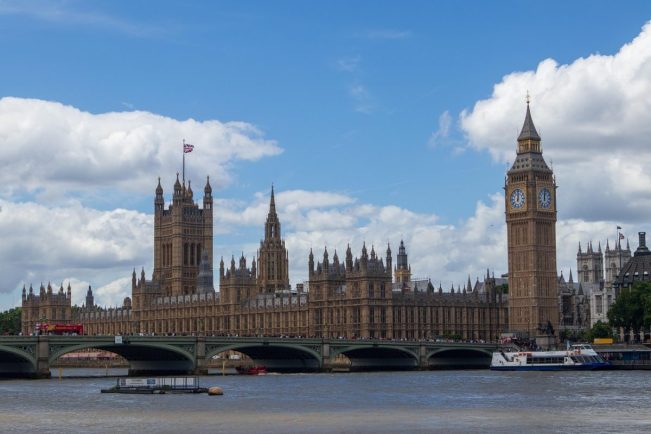
Prime Minister Sir Keir Starmer faced a stormy session of Prime Minister’s Questions (PMQs) this morning, fielding challenges from both opposition and independent MPs on issues ranging from Cabinet infighting to immigration policy, unemployment, and the death penalty.
The session began with an unusually loud cheer for Sir Keir as he entered the Commons, a gesture that, in Westminster tradition, can sometimes signal political turbulence behind the scenes.
Badenoch Accuses Starmer of ‘Losing Control’
Conservative leader Kemi Badenoch led a combative attack, accusing Keir Starmer of presiding over a “toxic culture” in Downing Street and a Government “at war with itself.” She referenced reports of briefing wars between senior ministers, quipping that No 10 aides had resorted to claiming MPs could not remove the Prime Minister “because it would destabilise international markets.”
Sir Keir insisted his Government remained “a united team,” highlighting recent economic figures and investment pledges. “We are delivering together,” he said, pointing to growth upgrades from the Bank of England and claiming success in trade negotiations with the US, EU, and India.
Badenoch pressed further, asking whether the Prime Minister retained confidence in his Chief of Staff, Morgan McSweeney, amid allegations of internal briefings against Cabinet colleagues. Sir Keir replied that he had “never authorised attacks” on ministers and that his team was “fully focused on delivering for the country.”
Rising Unemployment and the ‘Tax Doom Loop’
Ms Badenoch turned her fire on Labour’s economic record, accusing the Government of trapping the country in a “tax doom loop” through overspending and record-high taxation. She noted unemployment had climbed to its highest level since lockdown and had risen every month since Labour took office.
Sir Keir defended his record, claiming 300,000 more people were in work since the start of the year and citing increased NHS capacity as justification for last year’s tax rises. However, critics were quick to point out that Britain’s growth remains sluggish and that higher taxes have yet to deliver the prosperity Labour promised.
Farage and Lowe Push Starmer on Immigration and Crime
Reform UK leader Nigel Farage returned to the despatch box for the first time in months, pressing Sir Keir to back council-led closures of migrant hotels. He claimed local authorities in Northamptonshire were preparing to issue closure notices over public safety concerns.
Sir Keir said his Government was “gripping the mess we inherited,” noting that the number of hotels used to house migrants had halved from 400 to 200 since the election. He also accused Farage of failing to condemn racist remarks made by one of his party’s MPs.
Independent MP Rupert Lowe went further, calling for a referendum on reintroducing the death penalty. He argued that for “monstrous” crimes where guilt is beyond doubt, the issue should be “put to the British people.”
The Prime Minister firmly rejected the proposal, saying, “Reintroducing the death penalty is not the answer. It didn’t work when it was in place and led to the deaths of those later found innocent.”
Prisons and Gender Ruling
Conservative MP Rebecca Paul pressed Sir Keir on prison policy following the Supreme Court’s ruling on the legal definition of sex. She said HMP Downview in Banstead was “knowingly breaching the law” by allowing male prisoners in a women’s facility.
Sir Keir said the judgment “must be implemented in full,” promising that the specific cases raised would be investigated.
Questions from the Liberal Democrats and Labour Backbenchers
Liberal Democrat leader Sir Ed Davey questioned whether the Government would prevent any taxpayer-funded payout to Donald Trump following reports of his legal challenge against the BBC. Sir Keir reiterated his support for “a strong, independent BBC,” arguing that public trust in impartial journalism was “more important than ever.”
On a lighter note, Labour MP Gill German invited the Prime Minister to join her for a walk along the newly completed Rhyl promenade in North Wales, an offer Sir Keir described as “a very appealing invitation.”
A Divided Atmosphere
Observers noted an unusually tense mood on the Labour benches, with many MPs sitting in silence during Badenoch’s attacks on No 10. Laughter erupted from Conservative MPs when Sir Keir described his Cabinet as a “united team,” suggesting unease within his own ranks.
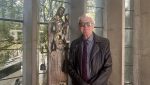
The session also saw a moment of cross-party respect as Sir Keir welcomed Mervyn Kersh, a 100-year-old D-Day veteran, to the Commons gallery and paid tribute to his service, along with the late Holocaust survivor Manfred Goldberg.