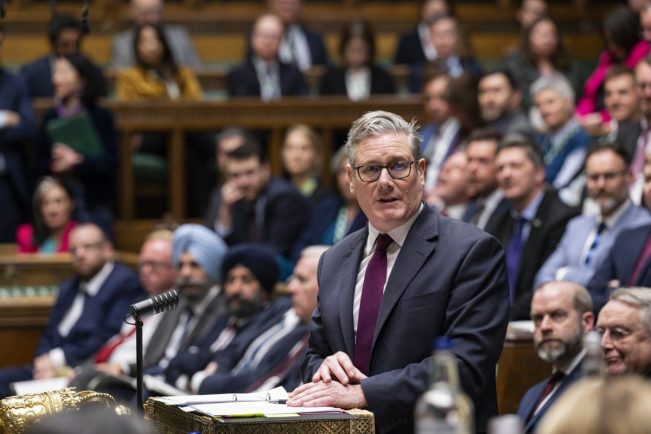
Keir Starmer is entering what could be the most consequential period of his premiership, with a parliamentary statement and high profile committee evidence set to test his authority and credibility.
The Prime Minister, who has been in Downing Street for nearly two years, will address MPs today (Monday) over the growing controversy surrounding Peter Mandelson’s appointment as UK ambassador to the United States.
The row centres on the revelation that Mandelson was appointed despite failing security vetting.
On Tuesday, senior civil servant Olly Robbins, dismissed last week as permanent secretary at the Foreign Office, will give evidence to the Commons Foreign Affairs Committee. It will be the first time both men have faced detailed scrutiny since the issue emerged.
Mounting political pressure
Pressure on Keir Starmer has intensified across Westminster, with opposition figures and some within Labour questioning his account of events.
Conservative leader Kemi Badenoch described the Prime Minister’s explanation as “preposterous” and suggested the situation could lead to his resignation. Liberal Democrat leader Ed Davey said the government’s account “doesn’t stack up” and called for an investigation into whether Parliament was misled.
Criticism has also emerged from within Labour ranks, with Anas Sarwar describing the affair as a “tipping point”.
Key dispute, who knew what
At the centre of the crisis is a dispute over whether Starmer was informed that Mandelson had failed security vetting.
The Prime Minister has said he was not told and expressed anger at officials, calling the situation “unforgivable”. However, reports suggest Downing Street had previously been warned about concerns surrounding Mandelson, including through media inquiries and parliamentary discussion.
Allies of Robbins argue he acted within legal constraints, citing the Constitutional Reform and Governance Act 2010, which they say limits how vetting information can be shared. Government ministers have rejected that interpretation, insisting the issue could have been flagged.
The dispute has escalated into a public confrontation between Downing Street and the former civil servant, who is reportedly considering legal action over his dismissal.
Questions over Parliament statements
The controversy has also raised questions about whether Starmer misled Parliament.
He previously told MPs that “full due process” was followed in Mandelson’s appointment and later said checks had granted “clearance” for the role. Those statements now appear difficult to reconcile with claims that security services recommended against approval.
Under the ministerial code, knowingly misleading Parliament is considered a resigning matter, though there is currently no definitive public evidence that Starmer did so deliberately.
Timeline and decision making under scrutiny
Mandelson was announced as ambassador in December 2024, before vetting had concluded. He took up the role in February 2025 and was later removed after further controversy.
The vetting recommendation, reportedly a clear rejection, was made before his appointment was finalised. Critics argue it is implausible that such a significant issue would not have been escalated to ministers.
Ministers, including Liz Kendall, have insisted Starmer would have halted the appointment had he been fully informed. However, the timing has raised questions about whether officials felt the decision had already been politically settled.
Mandelson’s role and wider diplomatic context
As ambassador, Mandelson had been tasked with strengthening relations with Washington, including efforts to secure US backing for the proposed transfer of British sovereignty over the Chagos Islands to Mauritius.
However, that process has stalled following cross-party campaigning and legal challenges brought by the Great British PAC, which delayed progress before any agreement could be formally ratified.
Mandelson’s background under renewed scrutiny
Attention has also turned to Mandelson’s past associations. His links to convicted sex offender Jeffrey Epstein and connections to Chinese business interests have been cited as potential factors in the vetting concerns.
His consultancy, Global Counsel, previously advised companies linked to Chinese state backed interests, some of which had attracted national security scrutiny in the United States.
Defining moment ahead
The coming days are expected to be pivotal. Starmer’s statement to MPs and Robbins’ committee testimony could determine whether the Prime Minister can restore confidence or faces a deepening political crisis.
With local elections approaching and disquiet growing within his party, the controversy has evolved beyond a procedural dispute into a broader test of leadership, judgement and accountability at the highest level of government.