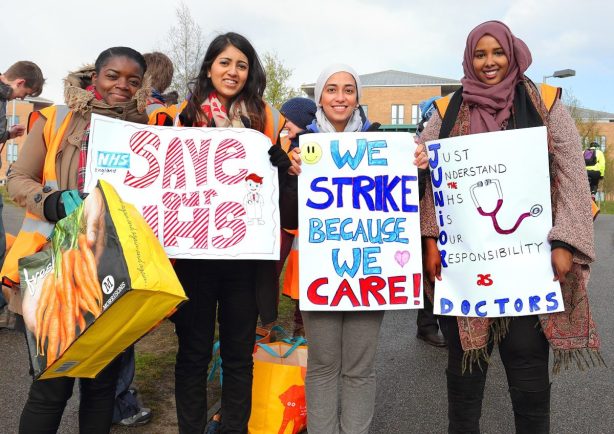
Sir Keir Starmer is facing mounting criticism after issuing a 48 hour ultimatum to junior doctors, demanding they call off what he branded “reckless” strike action or risk losing thousands of training opportunities.
The Prime Minister warned that plans to create at least 4,000 new speciality training posts would be withdrawn if the six day strike, due to begin on April 7 after the Easter bank holiday, goes ahead.
The dispute marks the latest escalation in a long running row over pay, with doctors calling for a 26 per cent increase to restore earnings to 2008 adjusted for inflation levels.
Ministers have already offered a 7.1 per cent rise for this year, a deal which would see more experienced junior doctors, now referred to as resident doctors, earning over £100,000 when additional hours are included. However, the British Medical Association rejected the offer without putting it to a vote of its members.
Sir Keir insisted the strike is “completely avoidable”, warning that continued industrial action would weaken the NHS and leave patients paying the price. But his tough rhetoric has done little to mask what critics describe as a growing loss of control over union negotiations.
Writing in The Times, the PM said:
“Walking away from this deal is the wrong decision. It is a reckless decision. And doing so without even giving resident doctors themselves the chance to vote on it makes it even worse.
“There are still 48 hours left to choose a better path. For patients, the NHS, and our doctors: I urge you to take it.”
The Conservatives said the NHS was being held hostage as a result of Labour’s earlier concessions to unions, arguing that the current crisis is a direct consequence of the Government’s approach. They have also said they would move to ban doctors from striking altogether, bringing them in line with the police and armed forces.
Shadow health secretary Stuart Andrew said:
“The BMA rejecting Labour’s offer just shows how weak this Government is in the face of militant unions.”
He added:
“We Conservatives repeatedly warned Labour that by giving inflation busting pay rises last year they would set a dangerous precedent. And now we see the consequences of their capitulation, with more disruption, more demands and no end in sight.”
Further criticism has centred on Sir Keir’s threat to withdraw training posts, with opponents warning the move could have lasting consequences for the health service.
A former MP told this newspaper:
“This is a deeply short sighted move from Keir Starmer. Threatening to pull thousands of training posts is not just a negotiating tactic, it is a decision that risks damaging the future of the NHS and hurting patients across the entire country. At a time when Britain desperately needs more doctors, this kind of brinkmanship is frankly ridiculous.”
The NHS is now bracing for significant disruption, with the timing of the strike, immediately after a bank holiday and during school holidays, expected to put additional pressure on already stretched staffing levels. Hospitals have been instructed to maintain most routine services, but officials have warned that delivering safe cover will be a major challenge.
Each round of strike action is estimated to cost the NHS around £250 million, further straining resources at a time when waiting lists remain high. With no resolution in sight, the standoff presents a serious test of the Government’s ability to manage the health service and restore stability.